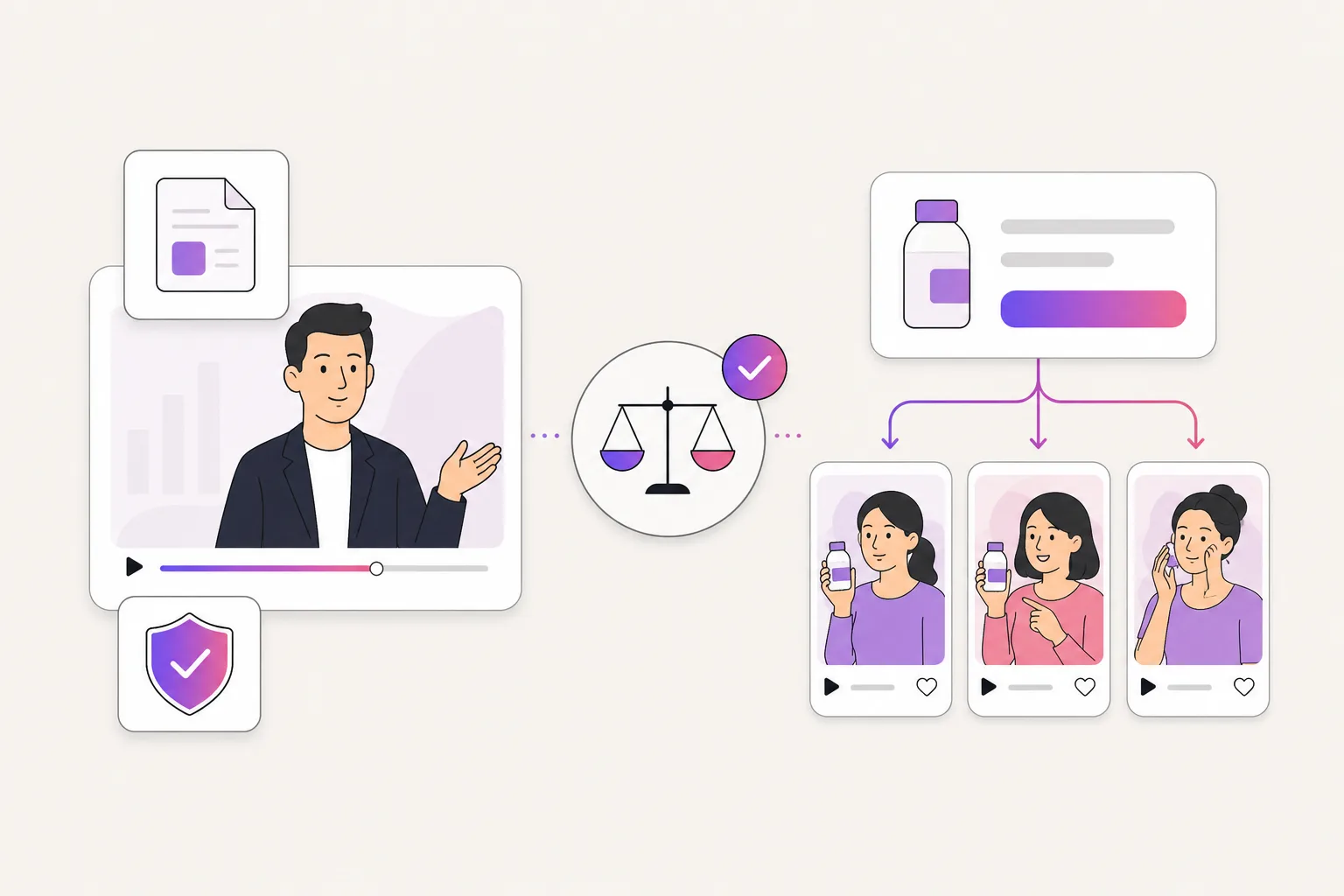
Synthesia vs UGCfy AI
Compare the job and the rights. Feature lists are not where this decision lives.
Decision pointSynthesiaUGCfy AI
Core job
Create professional business videos for communication, training, learning, enablement, and localization with AI avatars, voices, templates, and collaboration tools.
Start from the product link. UGCfy AI writes the hook first, then the script, then renders captioned short-form variants with an AI actor delivering them.
Best starting material
Works well from a business brief, existing text, presentation, document, or structured message that needs a polished presenter-led video.
At its best when the product page is the brief: benefits, images, objections, and claims become the raw material for ad angles.
Primary audience
Designed around employees, customers, learners, prospects, and other audiences who need clear business communication or education.
Designed around shoppers scrolling TikTok, Reels, and Meta placements, where the hook decides whether the rest gets watched.
Paid social usage
Review avatar licensing carefully. Synthesia's published stock and Synthetic Avatar license restricts several forms of paid promotion; custom-avatar arrangements are a separate case.
Designed for paid-social UGC from the start. Read the current UGCfy plan and terms against your commercial use case before publishing.
Creative testing
Useful when consistency and a repeatable business-video system matter more than testing many shopper-facing ad hooks.
Earns its place when you want several product-specific angles tested before budget goes anywhere: hooks, demos, routines, and testimonials.
Cost check
Check current credit allowances, how regenerations use credits, the avatar type, and the licensing terms connected to the output you intend to publish.
Price it by usable output: credits, scene estimates, seats, and commercial rights are all listed on the current pricing page.