
UGCfy AI

HeyGen Alternative for UGC Ads

HeyGen gives you a huge avatar library and waits for your script. This starts at the product page and decides the angle for you.

See the Synthesia comparison

What is the best HeyGen alternative for UGC ads?

HeyGen is a strong avatar video platform, and unlike some tools in this category it does market UGC-style output, so this is not a case of one product being built for ads and the other not. The difference is where the creative work happens. HeyGen hands you a large library of looks and voices and waits for you to supply the script, which is ideal when you already know the angle you want on camera. If you are staring at a product page with no idea which objection to lead with, that library does not help yet. UGCfy AI starts from the product URL, works out which buyer objection to open on, writes the creator-style script around it, then casts an actor and returns captioned vertical cuts. Before you commit either way, read HeyGen's terms: output generated on its Free Plan may not be used for advertising or any commercial activity, and the licence that covers paid plans sits in its own section of that document.

How to compare

  • Ask who decides the hook. If you arrive with a finished script, a bigger avatar library is real value; if you arrive with a product URL, it is not the bottleneck
  • Check the licence before the feature list. HeyGen's Free Plan output is barred from advertising in its own terms, so a free-tier trial cannot double as a live ad test

Same category, different starting line

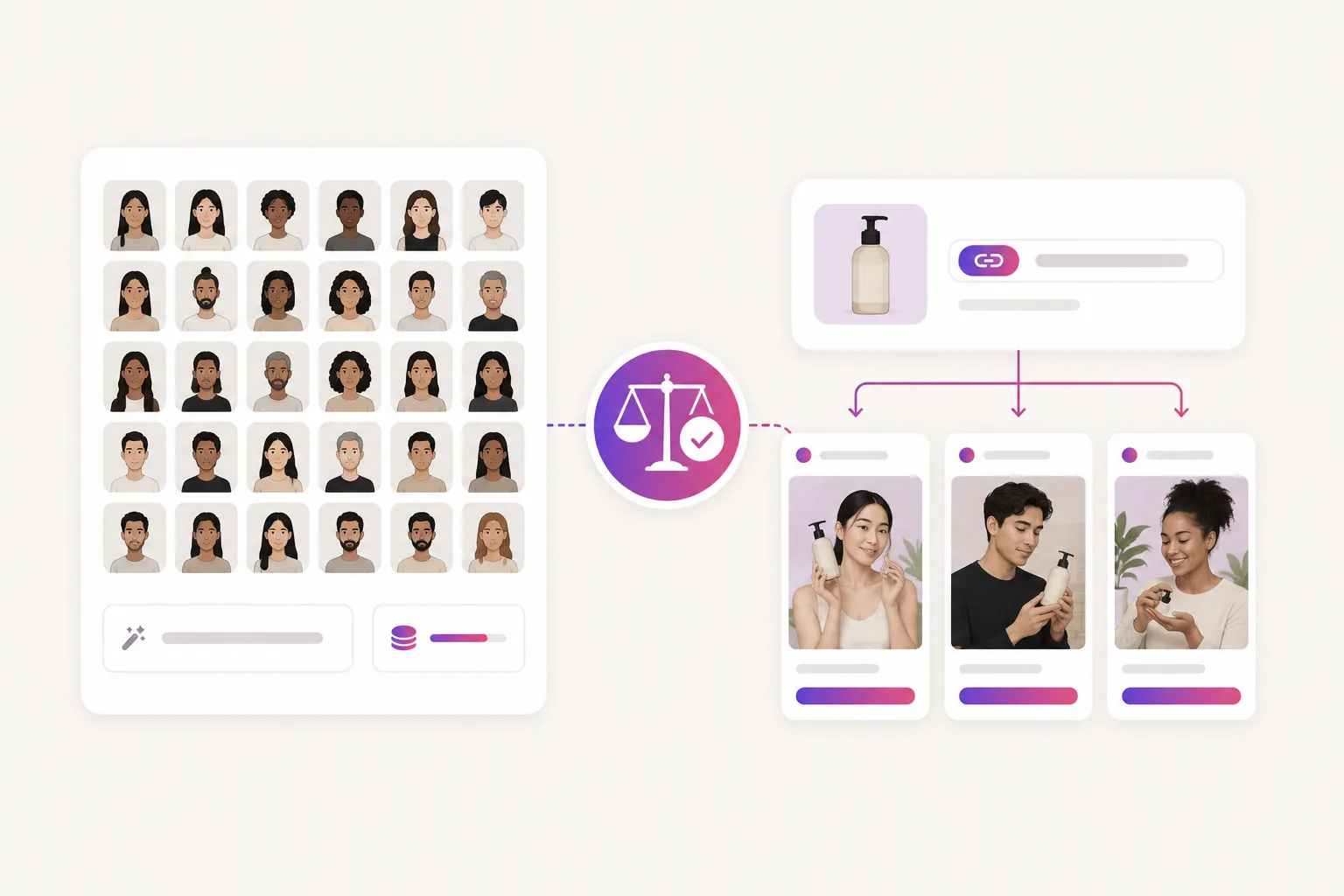
Both tools produce creator-style video. Only one of them decides the angle for you.

Illustration comparing an avatar library workspace with a product-led ad creative sequence

Bottom line

Pick HeyGen when you need the widest set of faces and languages for scripts you have already written. Pick UGCfy AI when a product URL has to become several testable ad angles this week.

Disclosure: UGCfy AI is our product. We build the tool recommended in this comparison, so verify every claim against the linked official sources before deciding.

1

Keep HeyGen for breadth of looks and languages

HeyGen's public positioning centres on a large stock avatar library plus heavy translation and language coverage. If your bottleneck is finding the right face, or shipping the same script into many languages, that breadth is the product you are paying for and UGCfy AI does not match it.
2

Choose UGCfy AI when the product page is the brief

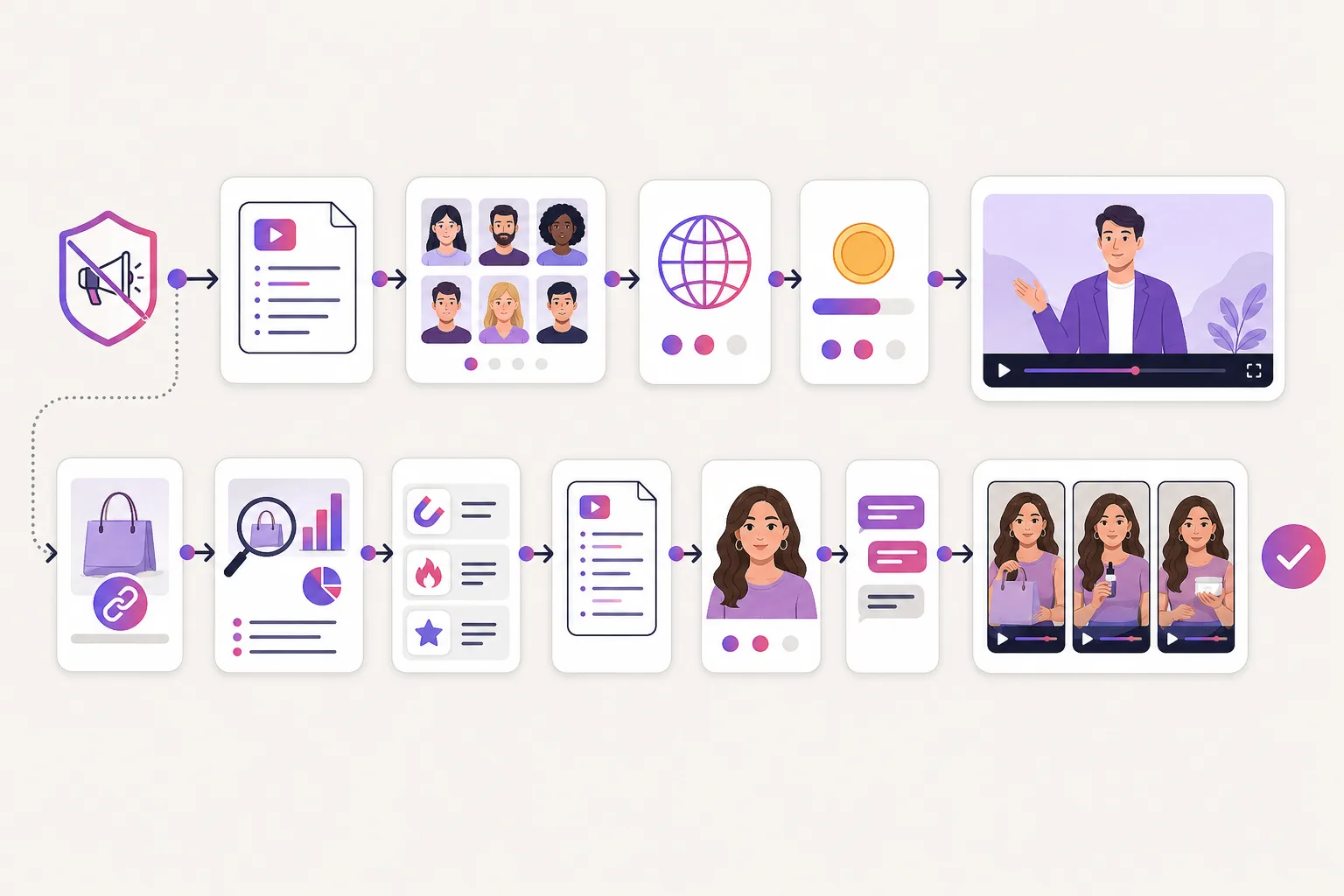
The hard part of a UGC ad is rarely the render. It is deciding which claim opens the video. UGCfy AI reads the product page, proposes competing hooks, then carries the chosen angle through script, actor, captions, and vertical cuts so the decision and the output stay in one place.

3

Read the terms before you budget either one

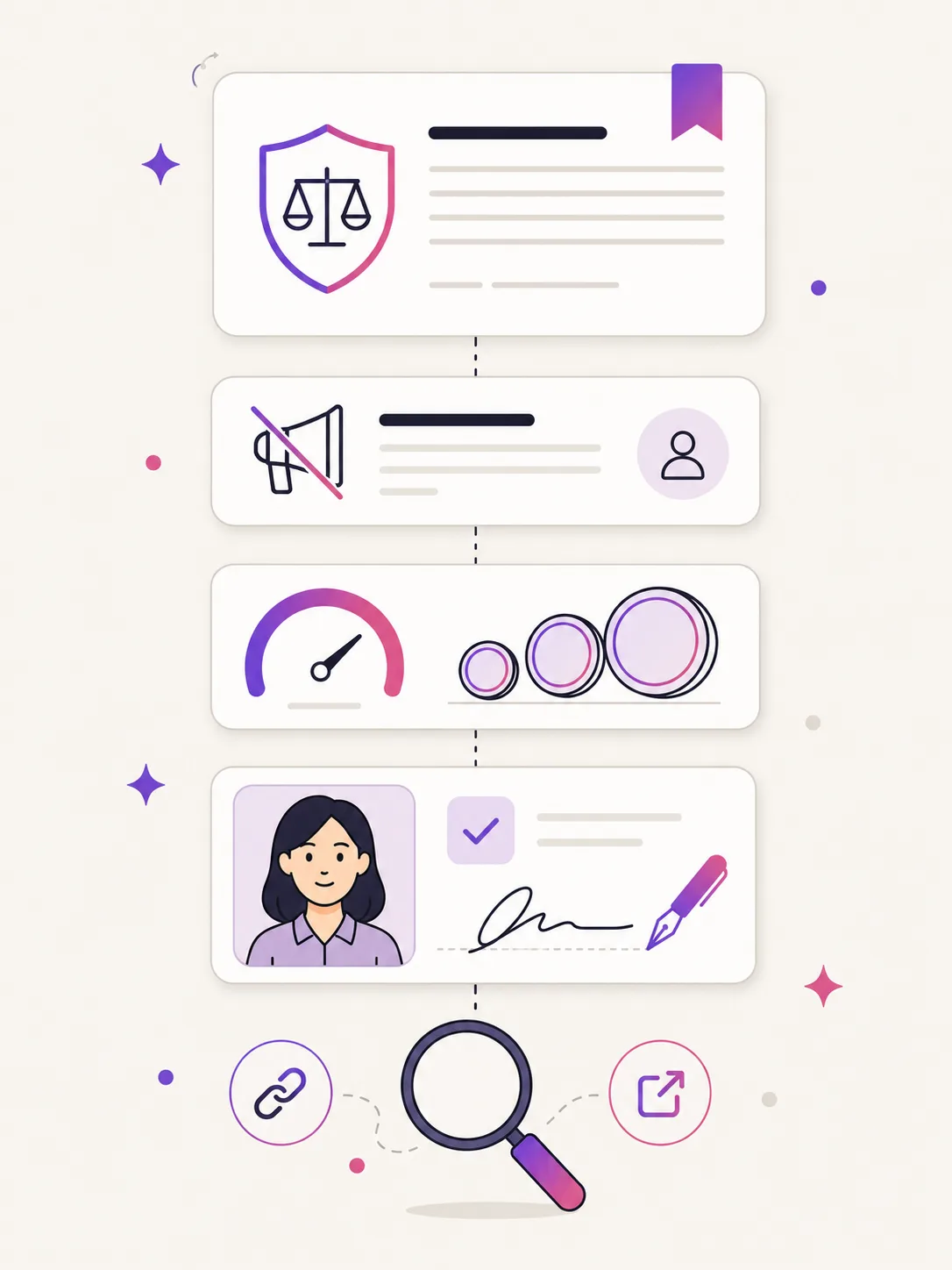
HeyGen's terms bar Free Plan output from advertising, monetisation, and client work, and they also require you to disclose AI-generated output where the law asks for it. Paid-plan rights live in a separate section. Verify the plan you intend to buy against that document rather than against any comparison page, including this one.

HeyGen vs UGCfy AI

Six decision points that decide which tool fits your week.

Decision pointHeyGenUGCfy AI

Where you start

A script or prompt you have already written, plus a choice of avatar from a large stock library.

A product URL. The tool reads the page first and proposes angles before any script exists.

Who decides the hook

You do. HeyGen executes the script faithfully; the creative judgement stays on your side of the screen.

The tool proposes competing hooks from the product's own benefits and likely objections, then you pick.

Avatar and language breadth

A large stock library of looks and voices with extensive translation coverage. This is the platform's headline strength.

A curated actor set aimed at product demos and testimonial-style delivery, not a general-purpose face library.

Free-tier ad use

Not permitted. HeyGen's terms state Free Plan output may not be monetised or used for advertising or client work, so a free trial cannot serve as a live ad test.

The free tier stops at scripts and storyboard planning rather than finished video, so it is a planning step and not a shortcut to free ad creative either. Check our pricing page for what each plan renders.

Claim safety

Script accuracy is your responsibility. HeyGen's terms also ask you to disclose AI-generated output where local law requires it.

Claim guardrails flag risky product claims while the script is still being written, which matters most in beauty and supplements.

Cost shape

Subscription plus a premium credit pool, with per-minute credit rates for the higher-quality avatar models. Verify current rates on the live pricing page.

Subscription credits sized around ad variants. Compare on cost per approved variant rather than cost per rendered minute.

What to verify before switching

Read HeyGen's terms in full, not a summary. The Free Plan advertising restriction and the paid-plan licence sit in different sections of the same document.
Use the live HeyGen pricing page for current plan names, seat charges, and premium credit allocations, because the tier structure changed during 2026.
Check the per-minute credit rate of the specific avatar model you plan to use, since the higher-quality models consume credits far faster than the standard ones.
Confirm whether credits roll over on the plan you are considering, and what an overage costs if they do not.
If you produce work for clients, confirm which plan tier actually permits client work before you quote a project.
Compare the two tools on cost per variant your ad review would approve, then check UGCfy AI's pricing page for current credit allocation.

Which path fits your next ad?

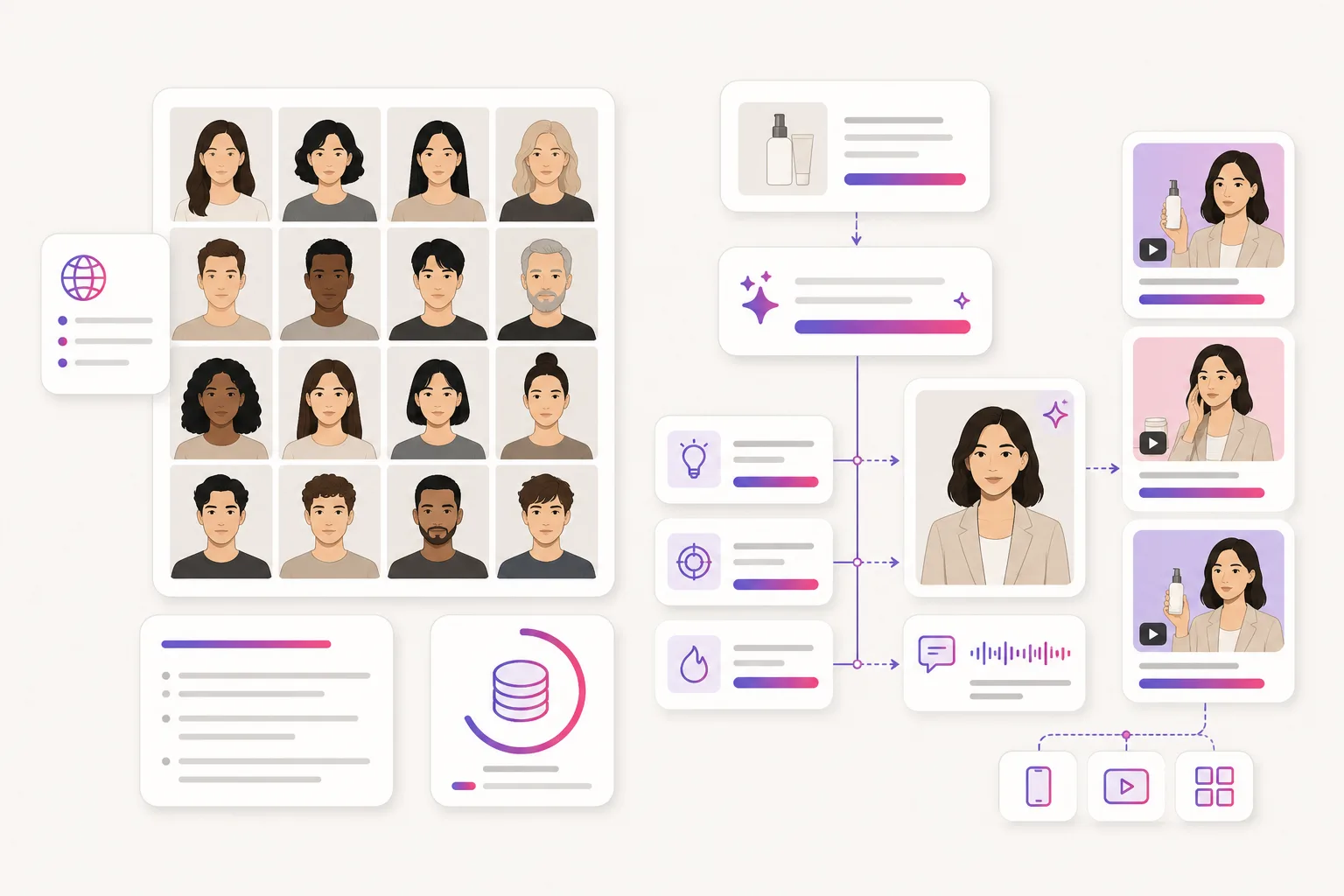
Both tools render creator-style video. The question is what you bring to them.

HeyGen

You already have the script and need the right face

The angle is settled, the copy is approved, and what you need is a believable presenter, possibly in several languages. A large stock avatar library is exactly the right tool and HeyGen is a strong pick.

UGCfy AI

You have a product page and no angle yet

Nobody has decided what the first three seconds say. This is the case UGCfy AI is built for: read the page, argue the hooks, then produce captioned vertical variants worth putting spend behind.

Both

You need both, for different stages

Some teams use UGCfy AI to find the angle that works, then rebuild the winner in a broader avatar platform for localisation. Running both is cheaper than forcing either into the other's job.

Illustration of two paths: script plus avatar picker, versus product link to vertical UGC ad variants

Other HeyGen alternatives worth a look

We build one of these and have marked it. Each entry says what it is bad at.

1

UGCfy AI

Our product

Starts at the product URL and returns captioned vertical ad cuts, with the hook decided before the script.

Try the free generator

Best when a product page has to become several competing ad angles and nobody has picked the opening line yet.

Not a general avatar platform. No large multi-language presenter library, no corporate training output, and the actor set is deliberately narrow.

2

Synthesia

Enterprise presenter video for training, onboarding, and internal communication, with strong localisation.

See the Synthesia comparison

Best for L&D and internal comms teams that publish instructional video on a schedule.

Built for business video rather than paid social. Its own licensing documentation is the first thing to read if you intend to run output as an ad.

3

Colossyan

Presenter-video platform aimed squarely at workplace learning, with course-style features.

Best for interactive training video, branching scenarios, and SCORM-style output.

Purpose-built for learning content. Vertical ad variants and hook testing are outside what it optimises for.

4

Vidnoz

Budget-first avatar video tool with a large template library and a generous free tier.

Read our Vidnoz review

Best when cost is the binding constraint and straightforward avatar output is enough.

Free tiers commonly carry watermark and commercial-use limits, so verify export and advertising rights before any campaign.

5

Akool

Broad AI video suite covering avatars, face swap, translation, and live streaming.

Read our Akool review

Best when you want several adjacent video capabilities behind one subscription.

Breadth costs depth in any single workflow, and paid-advertising licensing needs checking feature by feature.

What we checked

Jacob Park

Reviewed by Jacob Park · Founder, UGCfy AI

Last updated July 25, 2026

Alternative-page methodology

We compare the job a buyer needs done, not a feature score. Licensing and credit rules change, so this page points at HeyGen's own documents instead of restating terms that could go stale here.

Read HeyGen's published terms directly, including the Free Plan restriction and the separate paid-plan licence section.

Treated HeyGen as a genuine competitor in this category rather than pretending it does not target UGC-style output.

Avoided claiming UGCfy AI matches HeyGen's avatar library or language coverage, because it does not.

Verified every alternative listed is actively operating, and excluded tools whose independent status was unclear.

HeyGen alternative FAQ

Still deciding?

Tell us what you are producing and we will say whether UGCfy AI is the right category for it.

Contact us
What is the best HeyGen alternative?

It depends on what you are replacing. If you want the same job with a different library, Synthesia and Colossyan are the closest presenter-video options, with Colossyan leaning toward workplace learning. If your real problem is that nobody has decided the ad angle yet, the answer is not another avatar library, and UGCfy AI is built for that gap instead.

Can I use HeyGen videos in paid ads?

Not on the Free Plan. HeyGen's terms state that Free Plan output may not be sold, monetised, or used in connection with advertising or client work. Paid plans are covered by a separate licence section in the same document, so read that section against the plan you intend to buy rather than relying on any summary.

Is HeyGen good for UGC ads?

It can produce creator-style video, and HeyGen markets that use case, so this is a fair fight rather than a mismatch. The gap is upstream: HeyGen starts once you have a script, so it does not help you decide which product benefit or objection the ad should open on. If that decision is your bottleneck, a larger avatar library will not fix it.

How is UGCfy AI different from HeyGen?

The starting point and the creative decision. HeyGen takes a script you wrote and delivers it convincingly through a chosen avatar. UGCfy AI takes a product URL, works out which objection to lead with, writes the creator-style script around it, then returns captioned vertical cuts sized for testing several angles against each other.

Does UGCfy AI have as many avatars as HeyGen?

No, and it is not trying to. HeyGen's stock library and language coverage are its headline strength. UGCfy AI keeps a narrower actor set chosen for product demos and testimonial-style delivery, on the view that hook quality moves ad performance more than face variety does.

Do I need to disclose AI-generated ad creative?

Often yes, and HeyGen's own terms ask you to disclose AI-generated output where applicable law requires it. Beyond that, each ad platform sets its own policy and several now provide a disclosure toggle. Check the current rules for the platform you are running on, and keep your claims substantiated regardless of how the video was made.

See the angle before you pick the face

Paste a product link and get a UGC ad preview free. No script required to start.