Break down competitor ads
Transcribe the ads that keep showing up in your feed. The hook, the claim order, and the CTA phrasing are all visible in text — pattern-match across five competitors in minutes instead of rewatching on loop.

Paste a TikTok link and get the full transcript in seconds — turn any video to text, then rewrite what works for your own product. Free, no signup.
Example output
Okay so I wasn't going to post this, but three people asked me what I've been using on my skin. This is the vitamin C serum I've had for six weeks now. Watch how it looks under makeup — no pilling, nothing. I'll put the link in my bio, they restocked yesterday.
The transcript is the fastest way to study what a video actually says.
Transcribe the ads that keep showing up in your feed. The hook, the claim order, and the CTA phrasing are all visible in text — pattern-match across five competitors in minutes instead of rewatching on loop.
Turn a top-performing video into a blog section, an email, carousel copy, or a script for the next video. Text is the universal starting format for every other channel.
Get the transcript first, then translate the script instead of re-briefing a creator. The pacing and structure carry over; only the language changes.
Use the transcript as a caption source or an accessibility text alternative when you publish the video on channels without auto-captions.
A UGC ad is mostly its script: the hook, the claim sequence, the objection handling, and the call to action. Once you have the transcript, you can study all of it at reading speed — what took the creator thirty seconds to say takes five seconds to scan, and patterns across many ads become visible side by side.
Copying a competitor's script word for word gets flagged by audiences and review teams alike. What transfers is structure: where the hook lands, how fast the product appears, how many proof points before the CTA. Transcripts make that structure explicit so you can rebuild it with your own product's claims.
Editing a script costs nothing; re-shooting a video costs days. Working from transcripts means you iterate at the text stage — swap hooks, reorder claims, tighten the CTA — and only produce video once the script reads right.
Updated July 2026. Workflow guidance reflects TikTok Creative Center recommendations on hook timing and creative analysis; transcripts come from the video's own captions or speech recognition.
Link in, text out, script next.
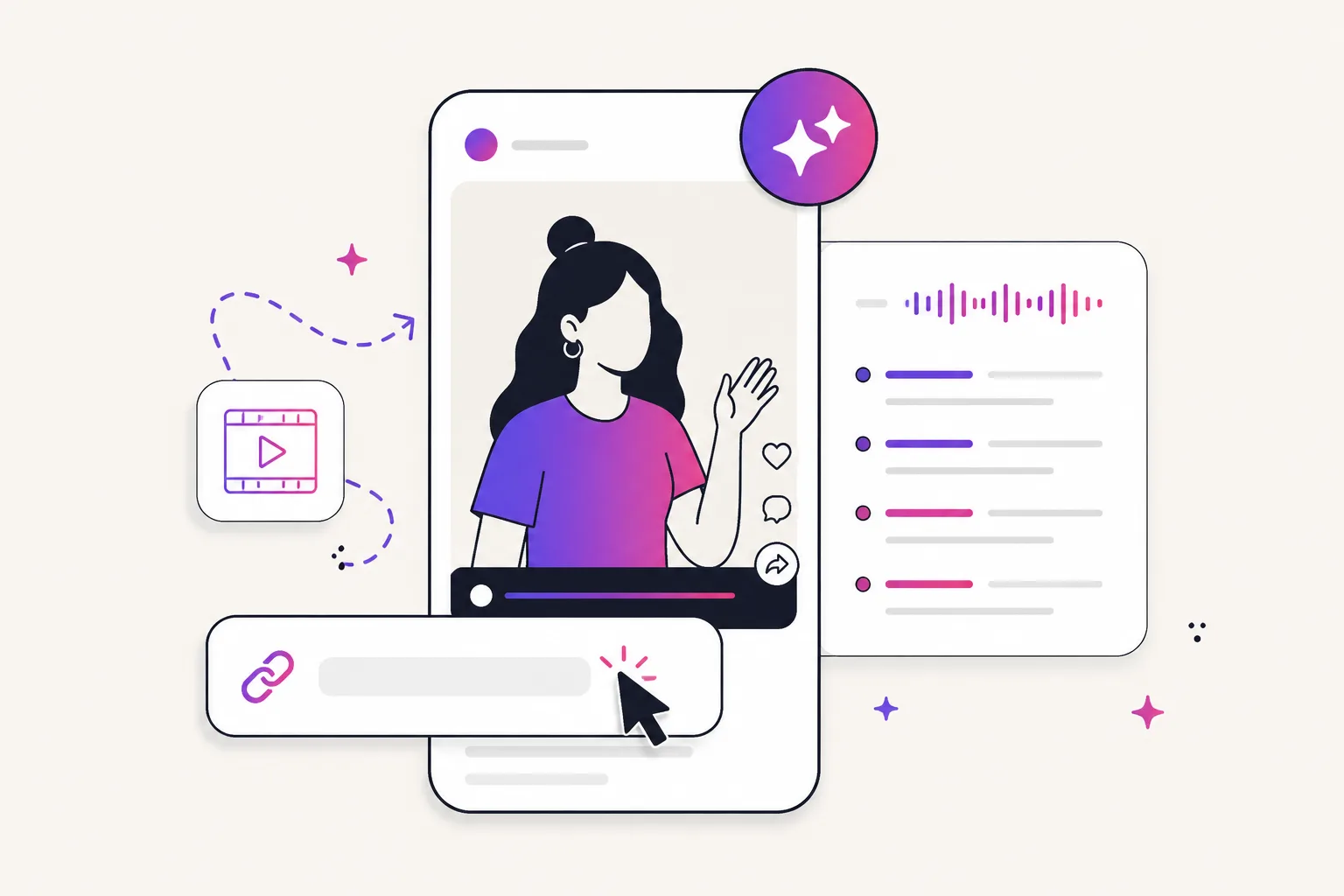
Step 1
Any public TikTok works — full links or vm.tiktok.com share links. No download, no watermark tools, no login.
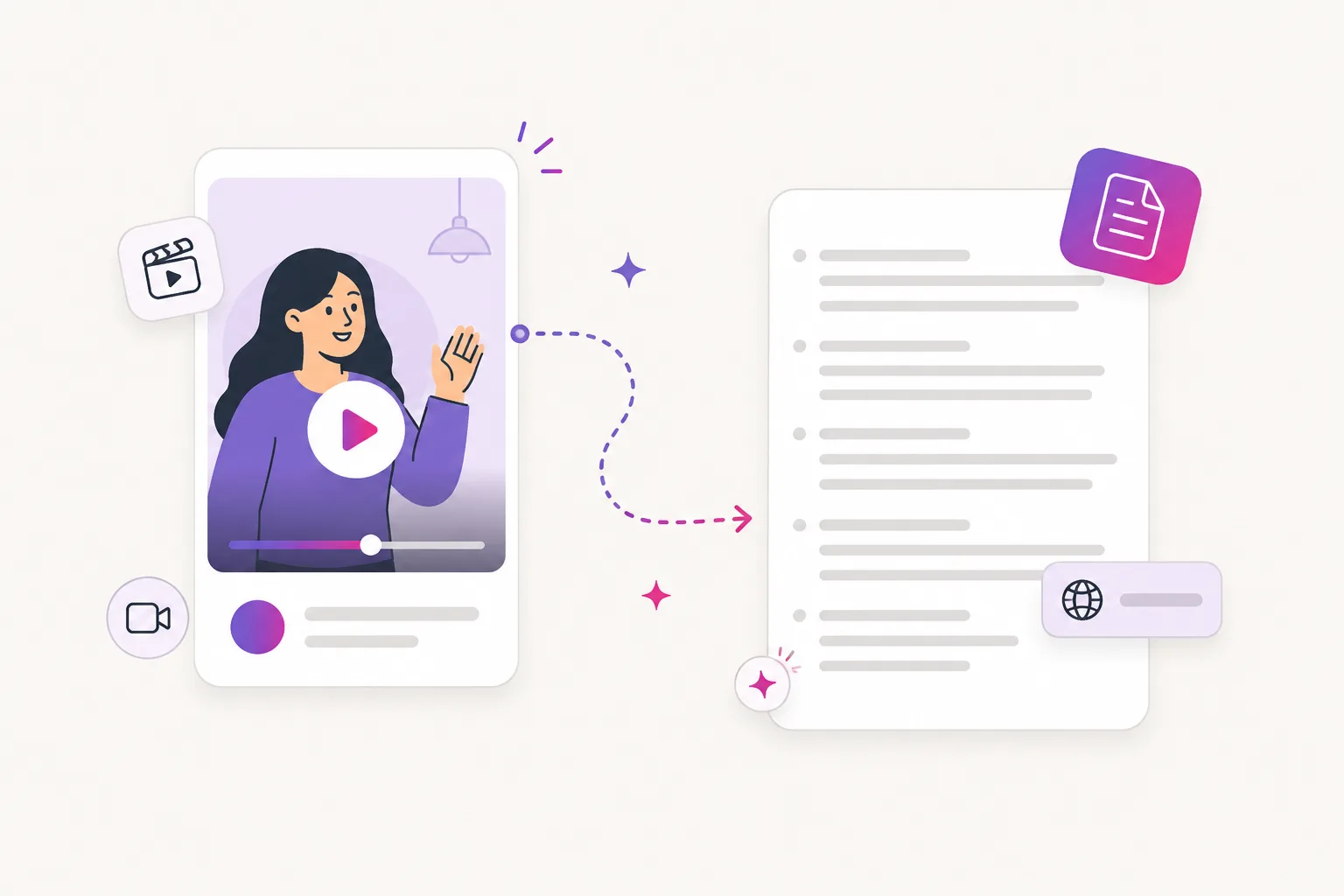
Step 2
We pull the video's captions — or transcribe the audio when captions are missing — and return clean, copyable text with the detected language.
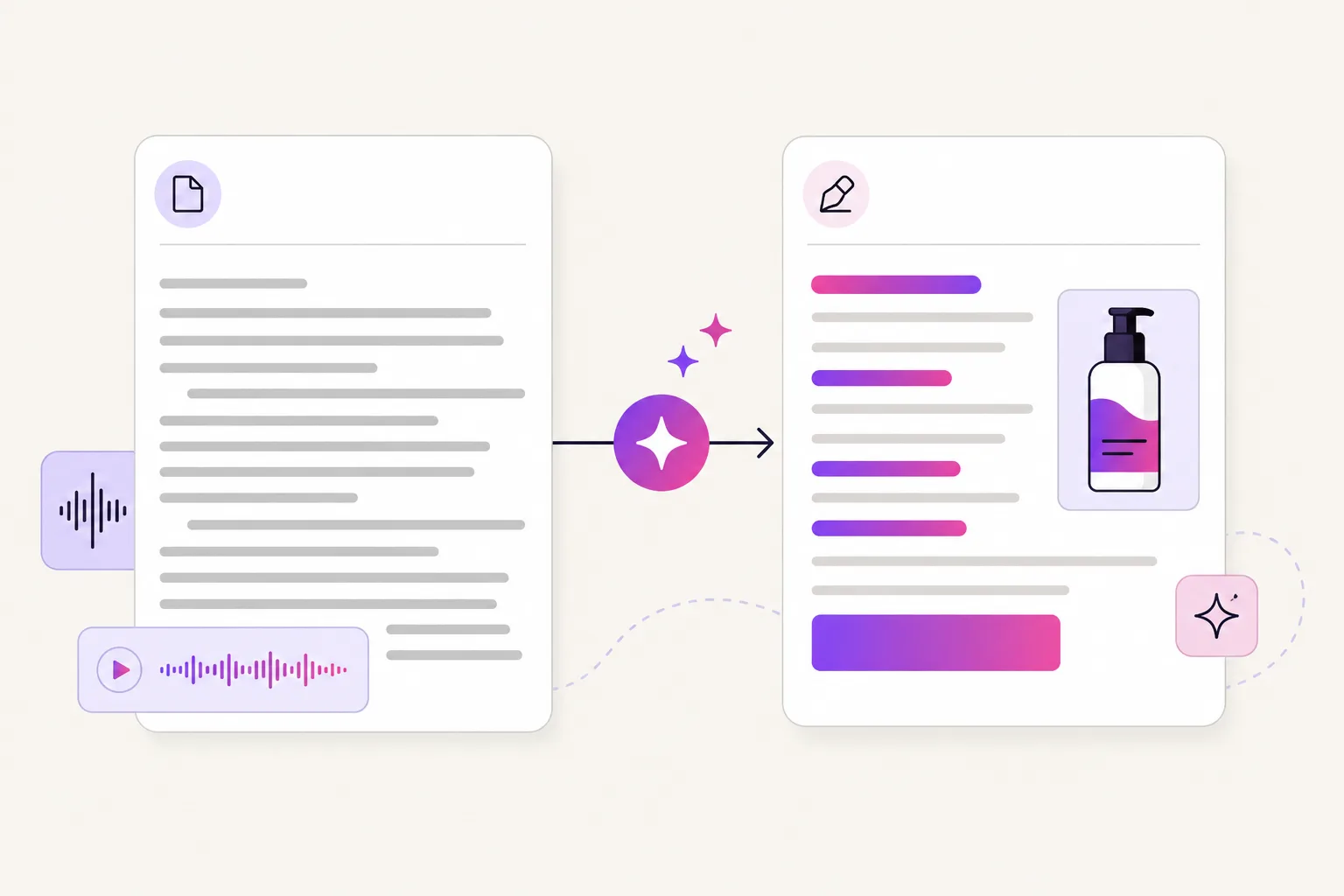
Step 3
Take the structure that worked and rebuild it around your own product's claims with the free UGC script generator.
Most transcript tools stop at text. Going from video to script for your own product is the point.
Pull the scripts from ads with real traction — the ones you keep seeing are the ones spending money profitably.
Hook type, time-to-product, proof order, CTA phrasing. That's the transferable part — not the words themselves.
Feed your product into the free script generator and apply the winning structure. New claims, proven shape.
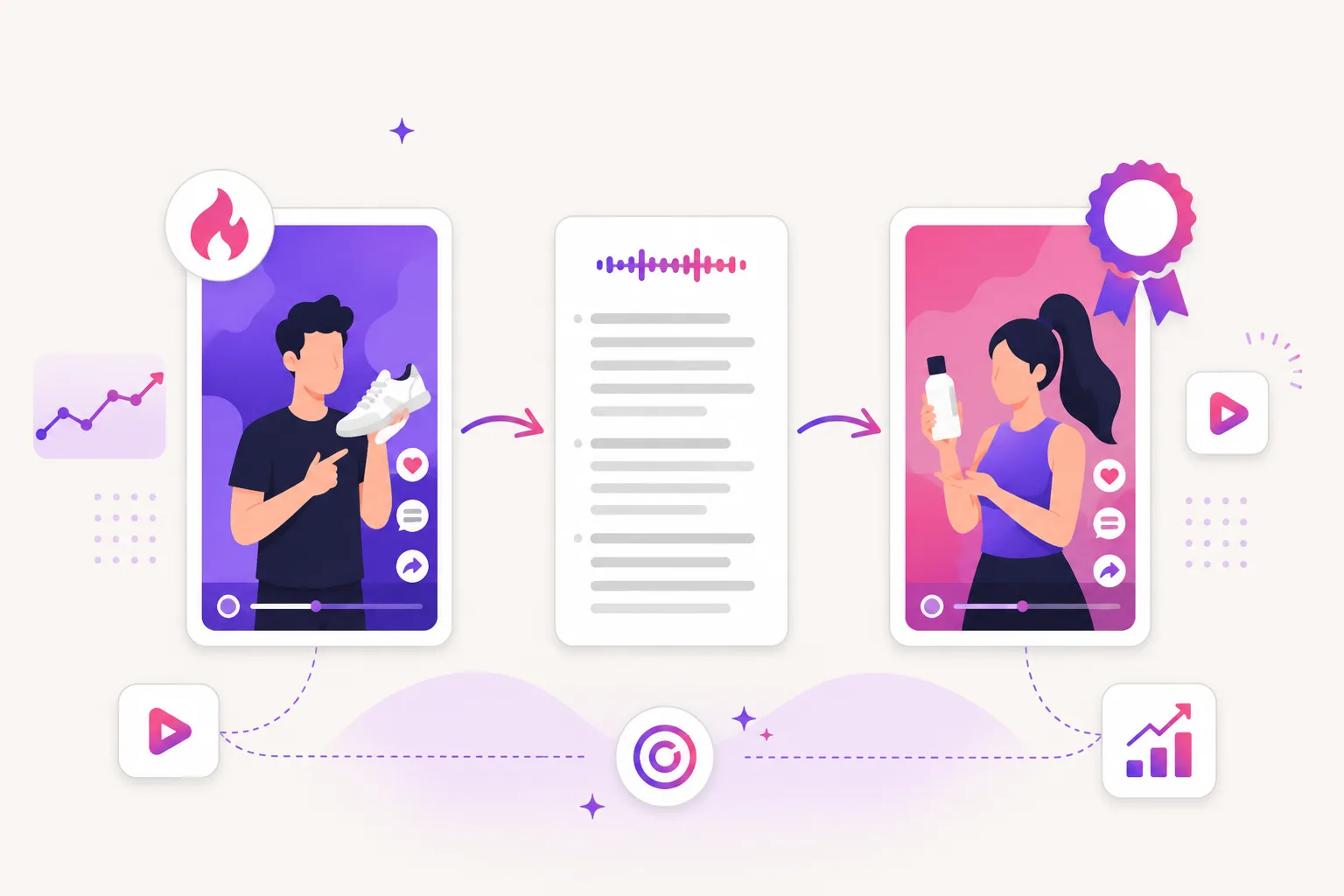
The study loop
Transcribe, extract, rebuild
Transcribe 3-5 winning ads
Same niche, different creators.
Mark the shared structure
Hooks, claim order, CTA — the pattern repeats.
Rewrite with your claims
Structure transfers; copying words doesn't.
A TikTok transcript generator converts a TikTok video's spoken audio or captions into readable text. This one pulls the video's own captions when available, or transcribes the audio with AI, so advertisers can study a video's hook, claim order, and CTA at reading speed instead of rewatching it on loop.
Paste the video's link into the generator above and click Get transcript. It reads the video's captions — or transcribes the audio when captions are missing — and returns the full text in seconds. Works with regular links and vm.tiktok.com share links.
Transcribing a public video for analysis, research, or accessibility is generally fine — it's the same text the platform shows as captions. Republishing someone else's script as your own ad copy is a different matter: use transcripts to study structure, not to copy lines.
No. The tool never downloads the video file — it retrieves the text transcript only. Transcripts are cached briefly so repeat requests for the same video are instant, and nothing is linked to you personally.
The transcript comes back in the video's original language, and the tool shows which language was detected. Videos with multiple caption tracks list the available languages.
Yes — 3 transcripts per day, free, no signup and no credit card. The limit resets at midnight UTC. Requests for videos someone already transcribed that day are instant and don't count against your limit.
If the video has captions (most TikToks do), you get those — they're fast and accurate. If not, speech recognition transcribes the audio, which takes a few seconds longer and can miss slang or brand names.
That's the intended workflow. Study the transcript's structure — hook, claim order, CTA — then use the free UGC script generator to rebuild that structure around your own product's claims, and the free video generator to produce the ad.
Turn a product link into UGC-style video ads that follow the structures you just learned.