TikTok Ads Library: How to Run Competitive Creative Research That Pays Off
The TikTok Ads Library is a public archive of ads that have run on the platform, and TikTok's Creative Center hosts a Top Ads section for browsing high-performing campaigns. For research, they work as a source of structural patterns like hooks, proof, pacing, and offer framing that you translate into your own briefs, not as a place to lift assets.
Most people open an ad library, scroll for ten minutes, feel vaguely inspired, and close it. That is entertainment, not research. The difference between the two is a system: what you filter for, what you record, and how you convert observations into tests. This guide walks through that system.
What the TikTok Ads Library actually is
There are two distinct surfaces worth separating in your head.
The TikTok Ads Library is a transparency archive. It exists to show what ads have appeared, who paid, and related targeting details, depending on region and disclosure requirements. It is broad but not curated for performance.
The Creative Center Top Ads section is different. It surfaces ads TikTok flags as high-performing and annotates them with signals like engagement and relative click-through rate. In TikTok's own examples, ads are tagged with details such as "Top 10% CTR" alongside like counts and budget bands, with short notes on why the creative works. One described "a direct before-and-after narrative" that keeps the benefit obvious while pacing feels native to the feed.
For competitive creative research, Top Ads is usually the richer starting point because it already leans toward ads that performed, while the transparency library is better for confirming who is running what.
Filter for durability, not just likes
A high like count tells you an ad got attention. It does not tell you the ad made money. The signal you actually want is durability: an ad that has been running for a long stretch, especially with a high budget band, is more likely to be profitable, because brands rarely keep funding losers.
When you browse, prioritize in roughly this order:
- Run length. Ads live for weeks or months usually earn their keep. Newly launched ads are unproven.
- Budget signals. Where the interface shows spend bands, a sustained high band on an old ad is the strongest profitability hint you'll get from the outside.
- Repeated variants. If a brand runs several cuts of the same concept, that concept is probably a winner they're scaling.
- Performance tags. Creative Center's relative CTR labels help, but treat them as one input, not proof.
Ignore any single viral spike. You are hunting for patterns a brand chose to keep paying for, not the ad that got lucky once.
What to record from each ad

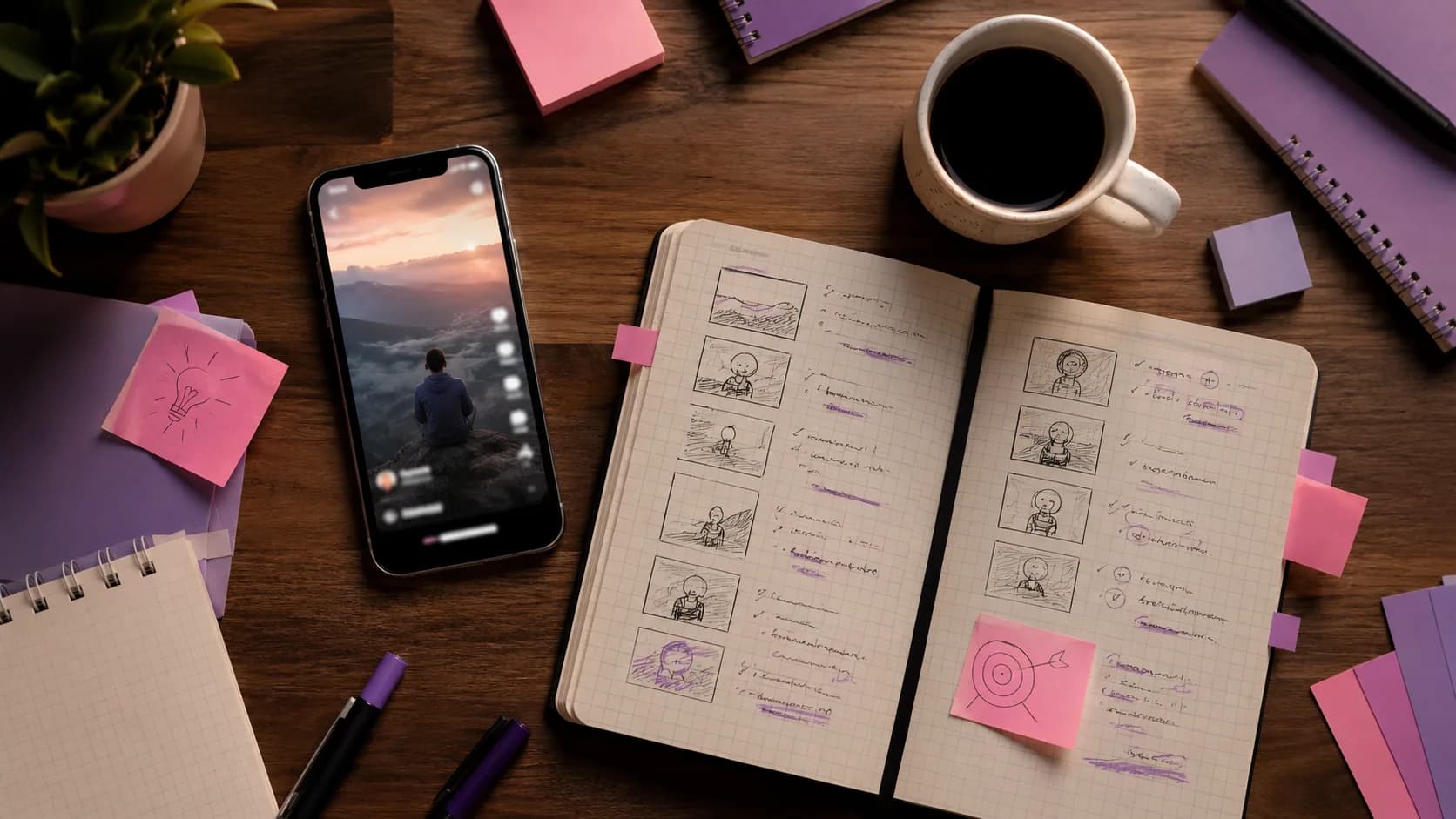
Browsing without a template produces vibes. A short, fixed capture sheet produces reusable inputs. For every ad worth keeping, log five things.
- Hook pattern. What happens in the first three seconds? Name the mechanism: question, bold claim, visual disruption, before-and-after tease, or curiosity gap. TikTok's own annotations point at this, noting that "leading with curiosity creates momentum."
- Proof type. How does the ad earn belief? Demonstration, side-by-side result, on-camera testimony style, ingredient or spec detail, or social validation.
- Pacing. Cut frequency, scene count, and where the product first appears. Some winners front-load the product; others delay it behind a story beat.
- Offer framing. How is the ask positioned—discount, bundle, risk reversal, scarcity, or a plain "shop now"? Note where in the video it lands.
- Native feel. Does it look produced or like something a creator filmed on a phone? TikTok flags ads that turn product use into "a lived-in story instead of a hard sell."
Five fields, one row per ad. After twenty ads you'll see clusters, and those clusters are your hypotheses.
Turn observations into testable briefs
The point of the sheet is not a swipe file to admire. It's raw material for briefs your own team can shoot. Convert each recurring pattern into a testable statement, then a script structure.
A pattern like "top ads in this category open with a before-and-after tease and delay the product reveal to second four" becomes a brief: open on the after-state, hold the reveal, place proof at the midpoint, offer in the final beat. That is a structure you can produce many ways without touching anyone else's footage. If you want to move fast from a brief to finished cuts, you can create TikTok-focused UGC ads from a product URL and generate several script and hook variants to test the pattern.
Two rules keep this honest:
- Test the structure, not the specific claim. Borrow "leads with a spec detail," not the exact spec.
- Change one variable per test so you learn something. Our creative testing framework for UGC ads covers what to change, measure, and keep. For the script side, our UGC ad script templates map cleanly onto the patterns you'll pull from the library.
UGCfy AI runs this from a product URL or brief and can produce hooks, scripts, storyboards, AI actor scenes, captions, and ad-ready video in vertical 9:16 or square 1:1, across more than 20 languages, useful when a pattern needs several variants quickly.
Studying structure vs copying assets
There is a real line here, and crossing it creates legal and brand risk. Studying a competitor's ad structure—hook mechanics, pacing, proof order, offer placement—is normal competitive research. Reproducing their assets is not.
Stay on the safe side:
- Never reuse their footage, voiceover, music, or on-screen graphics. Those may be protected, and any actor or creator has their own rights.
- Don't mimic a specific creator's face, voice, or likeness. Describe the role ("a person demonstrating the product in a kitchen"), not the individual.
- Don't copy protected brand elements—logos, taglines, or distinctive packaging beyond fair comparison.
- Recreate the idea in your own words and shots. A structure is a template; the execution must be yours.
A simple test: if someone watched your ad next to the original, would they see a shared technique or a duplicated asset? The first is research. The second is a problem. When your creator content is AI-generated, don't present an AI actor as a real customer or imply genuine personal experience—label creator-style content honestly.
A repeatable weekly research loop
Turn all of this into a rhythm rather than a one-off binge.
- Scan (20 min). Open Creative Center Top Ads for your category and the transparency library for your named competitors.
- Filter (10 min). Keep only ads that read as durable: long run length, sustained budget, repeated variants.
- Log (20 min). Record the five fields for each keeper.
- Cluster (10 min). Group by hook and proof type; find the two or three patterns that keep recurring.
- Brief (20 min). Write one testable brief per cluster, each isolating a single variable.
For pattern libraries to compare against your own scans, our roundup of TikTok ad examples breaks down UGC structures worth testing. Run the loop weekly and you build a private, current map of what works in your category, one you can act on instead of just admire.
Ready to move from research to production? Turn your best-performing patterns into testable creator-style ads with UGCfy AI. Start with a product URL and generate hook, script, and video variants in minutes.
Frequently asked questions
Is the TikTok Ads Library free to use?
Yes. Both the transparency library at library.tiktok.com and the Creative Center Top Ads section are publicly accessible for browsing ads that have run on the platform.
What's the difference between the TikTok Ads Library and Creative Center Top Ads?
The Ads Library is a transparency archive showing what ads ran and who paid. Creative Center Top Ads curates high-performing ads with signals like relative CTR and engagement, making it better for finding proven creative patterns.
How do I know if a competitor's ad is actually profitable?
You can't confirm profitability from the outside, but durability is a strong hint. Ads running for weeks or months with sustained high budget bands, or with many variants, are more likely to be earning their keep than a single viral spike.
Can I copy a competitor's TikTok ad?
You can study its structure—hook, pacing, proof order, offer framing—and recreate the idea with your own footage and words. Do not reuse their footage, voiceover, music, graphics, or mimic a specific creator's likeness, which can create legal risk.
What should I record from each ad I research?
Log five fields per ad: hook pattern, proof type, pacing, offer framing, and how native it feels. After roughly twenty ads, recurring clusters become your creative hypotheses to test.