
UGC Ad Script Templates: 5 Frameworks for TikTok and Meta Ads
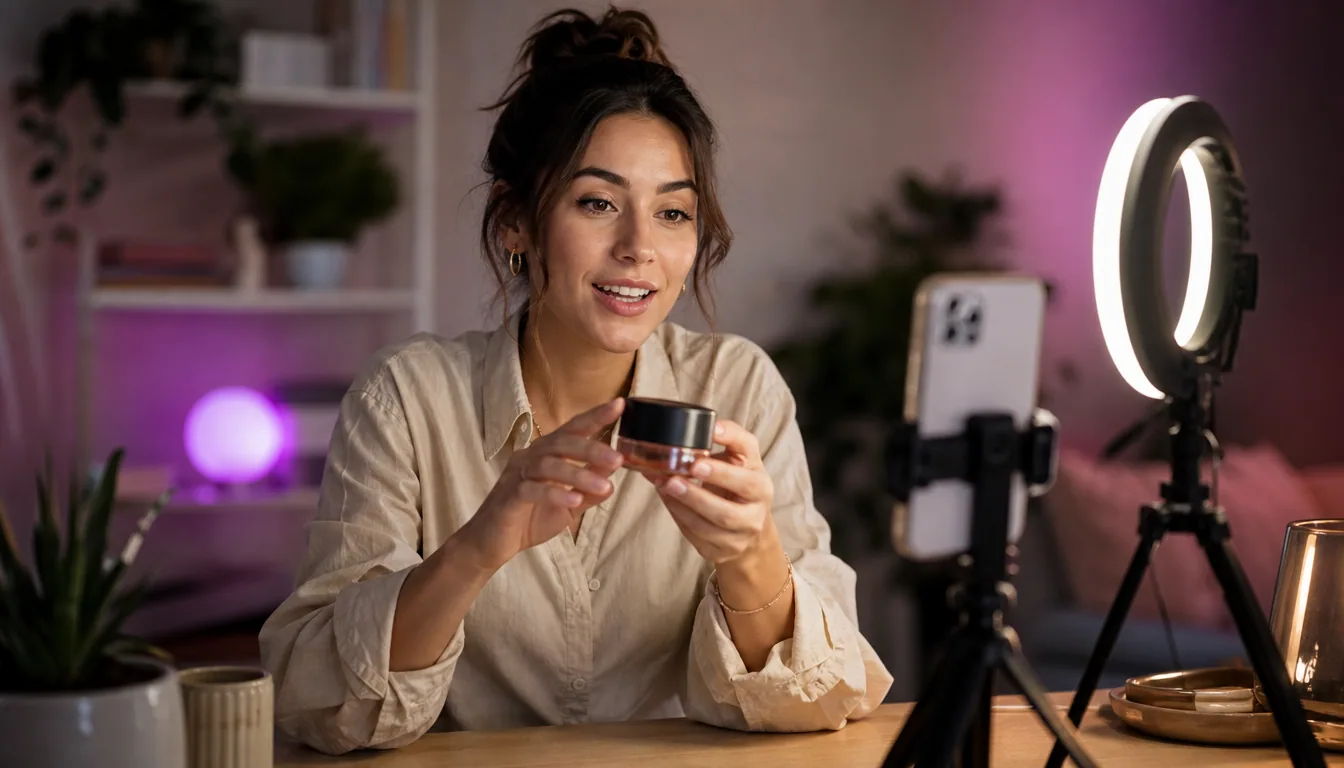
A UGC ad script is a short, spoken-word plan for a creator-style video ad: a hook, a middle that shows the product in use, and a close that tells the viewer what to do next. A good template is a fill-in structure you can reuse across products, so your first draft takes minutes instead of a blank page.
Most paid-social teams don't need more inspiration. They need a repeatable way to turn a product into five or six testable scripts before lunch. That's what a template does. It fixes the shape of the ad so you only have to swap in the specifics: the problem, the product, the proof, and the offer.
Below are five frameworks you can copy. Each one is written as a fill-in prompt, followed by a note on when it works and how to keep it honest. After the templates, there's a short section on what to test first and where a creator brief crosses the line into a scripted false endorsement.
what a UGC script actually is
A UGC script is not a corporate voiceover. It's meant to sound like one person talking to a camera about a thing they use. The structure is simple and consistent across most short-form ads: a hook in the first two to three seconds, a demonstration or story in the middle, and a call to action at the end.
Length matters. Vertical feeds reward brevity, so most working scripts land between 20 and 45 seconds of spoken content. Write for the ear, not the page—short sentences, plain words, one idea per line. If a line is hard to say out loud, cut it.
Three parts to name before you draft anything:
- Hook: the reason someone stops scrolling. Usually a problem, a claim, or a curiosity gap.
- Body: the product shown doing the thing the hook promised.
- CTA: a clear next step, usually tied to an offer or a low-friction ask.
If you want the full pipeline from product page to finished cut, we cover that in how to create UGC ads with AI. This piece stays focused on the writing.
the five frameworks

Each template uses bracketed slots you fill in. Keep the spoken lines conversational and resist the urge to stack claims. One clear benefit beats three vague ones.
1. Product demo
Best when the product does something visible and the value is obvious once you see it. The demo carries the ad, so keep narration light.
- Hook: "Okay, I need to show you what [product] actually does."
- Body: "So you [action step one], then [action step two]. Watch this part—[the visible result]."
- Proof beat: "That's it. No [common hassle the product removes]."
- CTA: "If you want one, [offer or where to get it]."
Shoot the result in close-up. The before-and-after contrast is what sells here, not the words.
2. Problem-solution
Best for products that fix a specific, nameable annoyance. Lead with the pain so the right person self-selects in the first line.
- Hook: "If you [experience this problem], stop what you're doing."
- Agitate: "I tried [common workaround] and it just [why it failed]."
- Solution: "Then I started using [product]. Now [the changed outcome]."
- CTA: "Grab it here—[offer]."
Keep the agitation short. One honest sentence about the problem is more credible than a dramatized rant.
3. Testimonial-style
Best for building trust on a considered purchase. This is also the framework with the highest honesty risk, which we address in the next section.
- Hook: "I've had [product] for [timeframe], so here's my honest take."
- Body: "What I like: [specific detail]. What surprised me: [second detail]."
- Balance beat: "It's not for everyone—if you [mismatch], skip it."
- CTA: "But if you [good fit], [offer]."
The balance beat is what makes a testimonial feel real. A review with zero caveats reads like an ad, because it is one.
4. Objection-handling
Best for a product people want but hesitate on—price, effort, or skepticism. Name the doubt out loud and answer it.
- Hook: "I almost didn't buy [product] because [the objection]."
- Reframe: "Here's what changed my mind: [the counter]."
- Proof: "[Concrete detail that defuses the objection]."
- CTA: "So if that's been holding you back too—[offer]."
Use the objection your comments and support tickets actually surface. Made-up doubts sound made up.
5. Offer-led
Best for retargeting, promotions, or launch windows where the deal is the story. Front-load the offer; don't bury it.
- Hook: "[Product] is [offer terms] right now and I don't think it lasts."
- Quick value: "It's the one I use for [primary benefit]."
- Urgency: "[Real reason the timing matters—stock, end date, launch price]."
- CTA: "Link's right here."
Only claim urgency that's true. A fake countdown erodes the trust the other frameworks work to build.
what to test first
Don't ship all five as-is and wait. The variable that moves results most is the hook, so isolate it. A practical starting order:
- Test hooks before anything else. Write three to five hooks per framework and cut the same body onto each. The winning opener tells you what your audience responds to.
- Then test framework against framework. Once you have a strong hook style, see whether problem-solution beats demo for this product, or the reverse.
- Then test the CTA and offer. Smaller lever, but worth tuning once the top of the ad is working.
Match format to placement. Vertical 9:16 fits full-screen feeds; 1:1 square can suit certain in-feed placements. Produce the aspect ratio the placement expects rather than cropping one master into everything.
If you're weighing AI-generated versions against booking human creators for these tests, the tradeoffs are laid out in AI UGC vs UGC creators.
brief versus false endorsement
That's the line. Two rules keep you on the right side of it: Don't script specific first-person claims a real creator can't truthfully say. Give them the frame; let them fill in their own truth. how AI creator ads actually work Understanding the mechanics behind these tools makes it easier to know when a synthetic actor crosses that line, and it's worth reading up on

A creator brief and a scripted false endorsement can look similar on the page. The difference is who is speaking and whether the claim is true.
A useful brief gives a creator structure and talking points, then lets them speak from their own real experience. It supplies the hook direction, the key benefit, and the offer. It does not put invented personal history in someone's mouth.
A false endorsement is a script that has a person—or a synthetic actor—claim a personal experience that didn't happen: "I've used this for six months" when they haven't, or a generated face presented as a genuine customer. That's the line.
Two rules keep you on the right side of it:
- Don't script specific first-person claims a real creator can't truthfully say. Give them the frame; let them fill in their own truth.
- Don't present an AI actor as a real customer. A synthetic presenter reading a script is a creative choice; passing it off as a lived testimonial is deception.
Disclosure and platform expectations around this are worth reading before you scale synthetic-presenter ads—see is AI UGC legal. The testimonial and objection frameworks above are the ones most likely to tempt an overclaim, so treat their first-person lines as prompts for real experience, not facts to invent.
turning templates into drafts faster
Templates fix the structure; you still have to generate variations at volume. The manual version is fine for a handful of scripts. Past that, teams usually want a faster loop.
UGCfy AI starts from a product URL or a short brief and generates hooks, scripts, storyboards, AI actor scenes, captions, and ad-ready video. It outputs vertical 9:16 and square 1:1 formats and supports more than 20 output languages, which helps when you're localizing a winning script instead of rewriting from scratch. It's built for e-commerce brands, DTC teams, and agencies running creator-style tests.
If you want a running start on the writing itself, you can write hooks and UGC ad scripts from a product link and edit from there.
Pick one framework, write three hooks, and ship a hook test this week. The template does the structural work—your job is to keep the claims honest and let the data pick the winner.
Frequently asked questions
How long should a UGC ad script be?
Most working short-form scripts run about 20 to 45 seconds of spoken content. Write for the ear with short sentences and one idea per line, and put the hook in the first two to three seconds. If a line is hard to say out loud, cut it.
Which UGC script framework should I use first?
Start with the one that fits your product. Product demo works when the value is visible; problem-solution suits a nameable pain point; testimonial-style builds trust on considered purchases; objection-handling addresses hesitation; offer-led fits promotions and retargeting. Whatever you pick, test hooks before you test anything else.
What's the difference between a creator brief and a false endorsement?
A brief gives a creator structure and talking points, then lets them speak from their own real experience. A false endorsement scripts a personal claim that didn't happen or presents a synthetic actor as a genuine customer. Give creators the frame; don't put invented first-person history in anyone's mouth.
Can I use an AI actor for a testimonial-style ad?
You can use a synthetic presenter as a creative choice, but you shouldn't present it as a real customer sharing a lived experience. Doing so is deceptive. Check current disclosure and platform expectations before scaling synthetic-presenter ads.
What should I test first when running these scripts?
Test hooks first, since the opener moves results most. Write several hooks per framework over the same body and cut them together. Once you have a strong hook, test frameworks against each other, then tune the CTA and offer last.