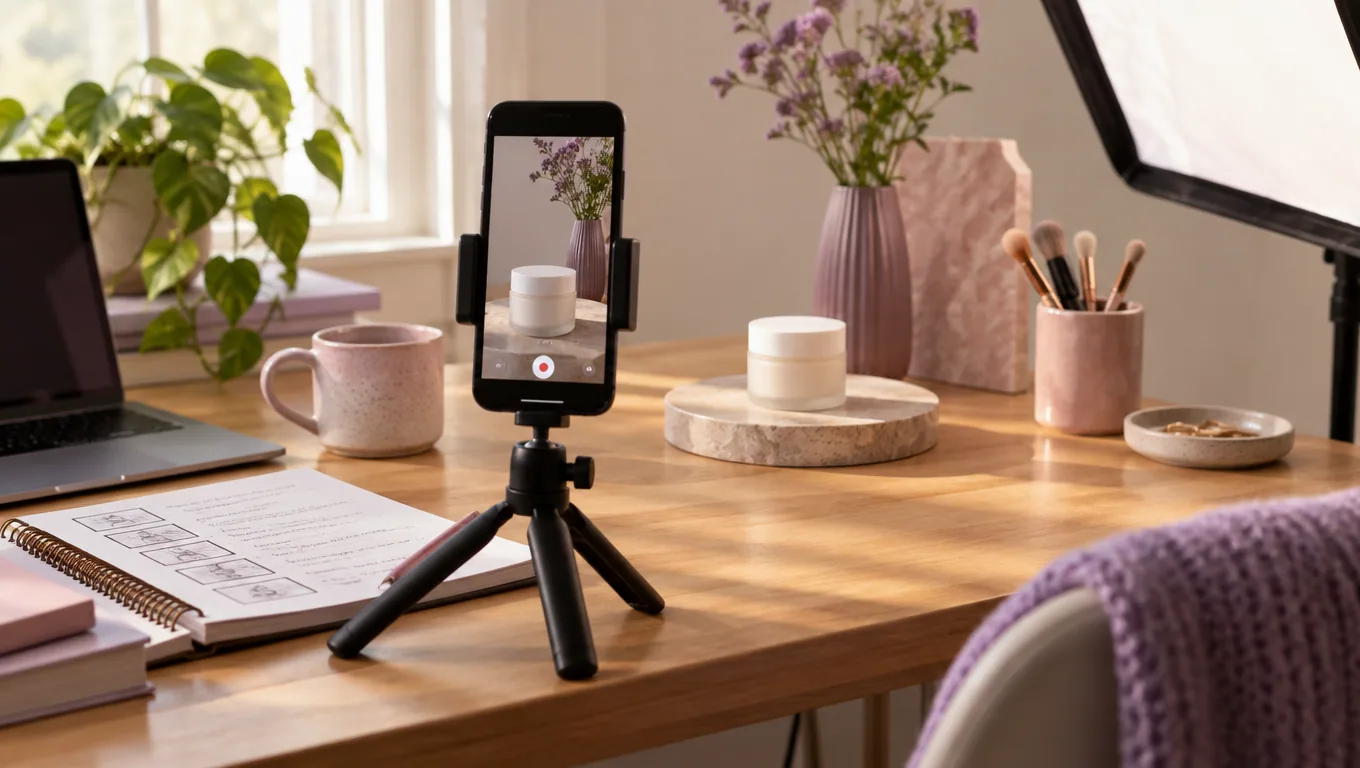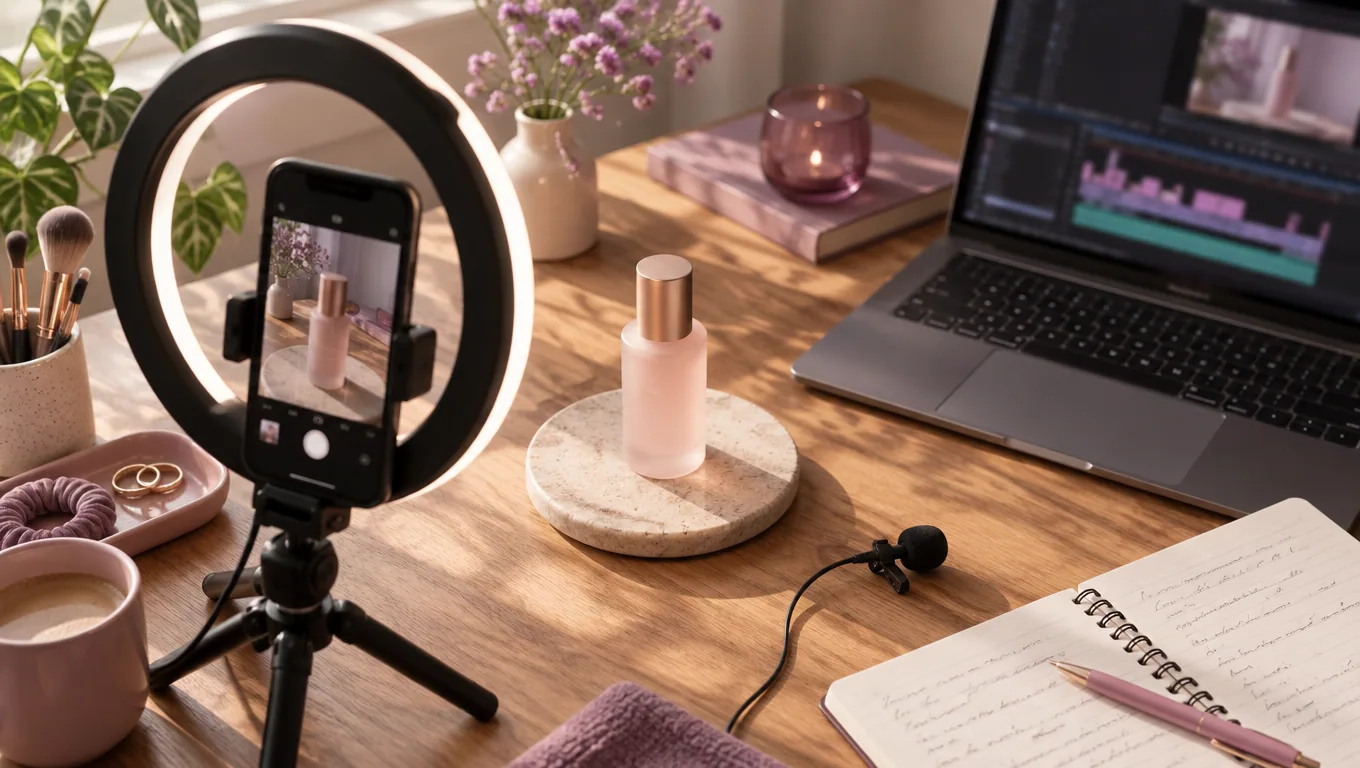
UGC-Style Ads: How to Make Creator-Style Video Without Misleading Viewers
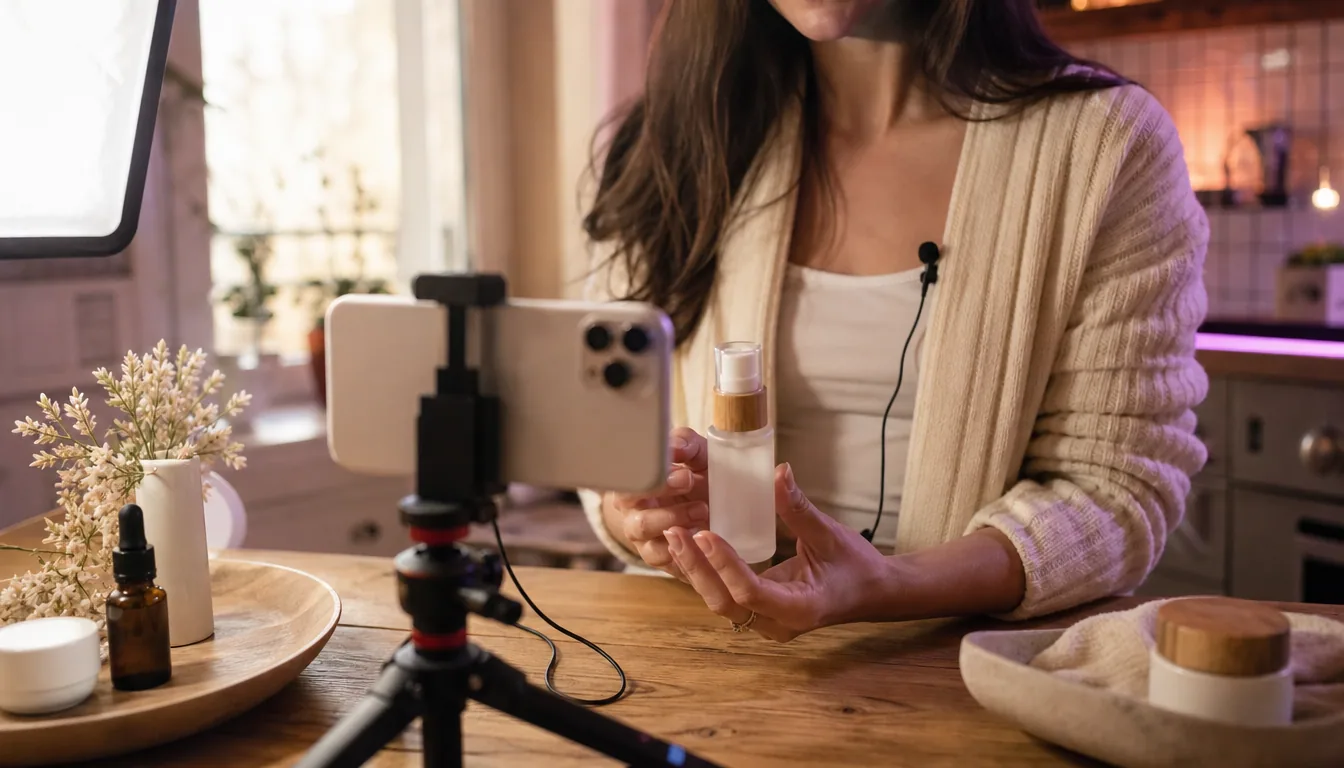
Short answer: UGC-style ads are paid advertisements produced to look and sound like a creator's phone-shot video: handheld framing, a spoken opening, real product use, and burned-in captions. They are not customer testimonials. The style is a format choice, and it stays honest only when the ad is disclosed as an ad and the claims inside it are ones you can actually support.
To make UGC-style ads well, treat the look as production texture rather than an endorsement. "UGC" originally meant content a customer made on their own. "UGC-style" means an ad your team commissioned or generated that adopts that visual grammar. The first is an endorsement. The second is advertising with a particular aesthetic. Blur that line in the ad itself and you are no longer making a production decision, you are making a claim about who is speaking.
The FTC's guidance on endorsements and reviews is the reference point here for U.S. advertisers, and it is worth reading directly rather than through summaries: Endorsements, Influencers, and Reviews. The practical takeaway for creative teams is that the format never launders the claim. If the video implies a person used the product and got a result, that has to be true and substantiated.
What makes an ad read as creator-style
Strip away the tone and the ingredients are fairly mechanical. Viewers are reading a handful of signals in the first second or two, mostly unconsciously.
- Vertical, single-subject framing. One person, one product, shot close. Wide compositions read as branded.
- A voice that starts mid-thought. Not "Introducing…" but a sentence that assumes you already care.
- Imperfect motion. A slight reframe, a hand adjusting the product, a cut that lands a beat late.
- Room tone. Audio recorded in a space, not a booth.
- Burned-in captions that match the spoken words rather than paraphrasing them.
None of those signals is about authenticity of endorsement. They are about production texture. That distinction is what lets you produce creator-style ads at volume without implying anything false, and it is the same distinction we draw in our overview of how AI creator ads actually work.
Build the opening before anything else
The idea that variants only teach you something when one element changes at a time is worth taking further, and we walk through it in our creative testing framework for UGC ads . Holding everything constant except the hook is what turns a pile of openings into a readable result.

Write the first line before you write the script. If the opening does not survive on its own, the rest of the video will not get watched.
A few openings that tend to hold up, phrased as patterns rather than magic formulas:
- The specific problem. Name the exact annoyance, not the category. "My straps kept slipping" beats "looking for better gear."
- The visual contradiction. Show the product doing something the viewer did not expect it to do, then explain it.
- The mid-conversation entry. Answer a question nobody asked out loud, as if replying to a comment.
- The demonstration cold open. No talking for the first beat. Just the hands and the product.
TikTok's own Creative Center commentary on high-performing ads points in a similar direction, describing before-and-after narratives and curiosity-led openings as recognizable patterns in ads that feel native to the feed (TikTok One Creative Suite). Treat that as a description of what the format rewards, not a promise about your results.
The failure mode here is writing four openings that are the same opening with different adjectives. If your variants all begin with a problem statement, you have one hook and three rewrites.
Show the product doing something
The middle of a creator-style ad is not a features list read aloud. It is a person using the thing, with the camera close enough to see what is happening.
Practical constraints that matter more than they sound like they should:
- Get at least one shot where the product is in frame and moving. Static hero shots feel like packaging photography.
- Shoot the friction, not only the payoff. The unboxing, the twist of the lid, the first press.
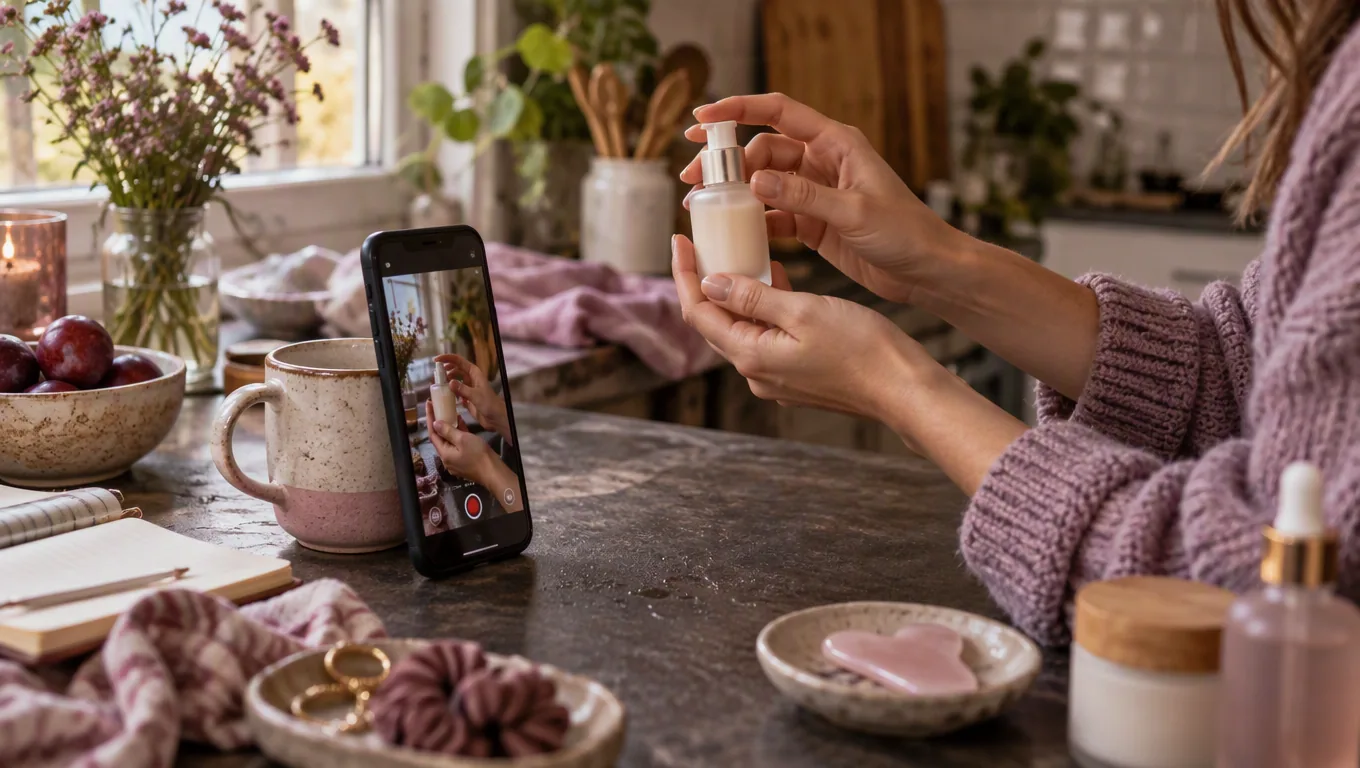
- Keep the hands in shot. Disembodied product shots break the illusion that a person is speaking.
- If a step takes ten seconds in real life, do not imply it takes one. Compressed time is fine; misrepresented ease is not.
That last point is where a lot of otherwise careful ads go wrong. Editing for pace is normal. Editing so that the product appears to do something it cannot do is a claim, and it will be read as one.
Proof that you can actually back up
Creator-style ads are persuasive because they feel like evidence. That is exactly why the proof layer needs the most discipline.
Rank your available proof before scripting:
- Demonstrable on camera. The product visibly does the thing. Strongest, and it requires no citation because the viewer sees it.
- Documented and substantiated. A test result, a spec, a materials claim you can defend on request.
- Reported by real customers. Genuine reviews, quoted accurately, attributed honestly.
- Vibes. "Everyone's obsessed with this." Not proof. Cut it or replace it.
If a line in your script depends on tier four, either move it up a tier or rewrite it as a plain descriptive statement about the product. A believable ad built on a fabricated result is a worse outcome than a modest ad built on a real one.
And a hard line: do not have an AI actor say "I've been using this for three months." That is a fabricated personal experience, regardless of how the video is captioned. The performer can present, explain, demonstrate, and recommend. It cannot testify to a life it did not live. If you want a testimonial, get a real one from a real customer and disclose the relationship.
Pacing, captions, and the technical layer
Once you have these details right, it helps to run the finished cut against a single review pass so nothing slips through — we collect the full set of checks in our quality-control checklist for realistic AI UGC , from product consistency to caption timing.

The unglamorous parts do a disproportionate amount of work.
Pacing. Creator video breathes unevenly. A long sentence, then a fast cut, then a pause on a reaction. Uniform cut lengths read as edited by a machine, even when the footage is real. Let one moment run long on purpose.
Captions. Burn them in. Match the spoken words exactly. Keep them in the safe zone, away from platform UI overlays at the top and bottom of the frame. Many people watch muted, and a caption that paraphrases the voiceover looks like an ad; a caption that transcribes it looks like a video.
Format. Cut vertical 9:16 as the primary and 1:1 as the secondary. Do not letterbox a horizontal edit and call it a vertical asset.
Language. If you are running the same ad across markets, produce it in the target language rather than subtitling. Subtitled English reads as imported.
None of this is where you should be spending your creative energy, which is precisely the argument for automating it.
Disclosure is a creative constraint, not a legal afterthought
Treat disclosure as something you design into the ad rather than bolt on at trafficking.
Three things to settle before the shoot or the generation run:
- Is this an ad? If it runs as paid media, yes, and it should be labeled as such through the platform's own ad delivery and any required disclosure.
- Is the performer synthetic? If so, do not write lines that assert real personal use, and follow whatever AI-content labeling the platform requires.
- Is anyone endorsing? If a real person is being paid or given product, that relationship gets disclosed clearly and up front, per the FTC's endorsement guidance.
Platform policies on synthetic media and disclosure change, and they differ between networks. Check the current rules for each platform you run on rather than relying on what was true last quarter. We go deeper on this in disclosure, platform rules, and safer ad practices.
The good news is that disclosure costs less performance than teams fear, because the creator-style format was never selling secrecy. It was selling proximity: a person, close to the camera, showing you a thing. That works when the viewer knows it is an ad.
Where AI actors fit in a UGC ad campaign
Generated video tends to fit best when it sits inside a repeatable process rather than a one-off shoot, which is the larger system we lay out in our practical guide to UGC marketing , covering how a product brief moves through briefs, hooks, proof, and disclosure.
The reason most teams look at generated video is not cost. It is variation count. A creative test needs more openings than a single shoot day can produce, and briefing, casting, and re-shooting a human creator for each hook variant is slow.
Generated production is a reasonable fit when:
- You need ten openings against one script body, not one polished film.
- You are localizing the same message across markets.
- You are testing framing, pacing, or caption treatment and want everything else held constant.
- The claims are demonstrable or documented, so nothing depends on a personal story.
It is a poor fit when the ad's entire premise is a lived experience, when the product needs a physical demonstration only a real hand can perform convincingly, or when your category's audience is unusually sensitive to synthetic performers.
UGCfy AI works from a product URL or brief and generates hooks, scripts, storyboards, AI actor scenes, captions, and ad-ready video in 9:16 and 1:1, across more than 20 output languages. It is built for e-commerce brands, DTC teams, and agencies producing creator-style paid social at test volume, not for manufacturing testimonials. If you are deciding between generated and human production for a given campaign, our comparison of AI UGC and UGC creators lays out the tradeoffs.
A short decision framework
Before a UGC-style ad goes live, run it against four questions.
- Would this line still be true if a lawyer read it? If not, it is not a hook, it is a liability.
- Does the video imply a personal experience that did not happen? If yes, rewrite the line or use a real customer.
- Is every number or result in the ad something you can produce evidence for? If not, cut the number.
- Would a viewer who knows this is an ad still find it useful? If the persuasion depends on them not knowing, the ad is built wrong.
An ad that passes all four can be as handheld, as fast, and as native as you like. The format is not the problem. Pretending the format is a person is.
Ready to build variants instead of rewrites? Choose an AI presenter for your ad and generate creator-style openings, captions, and cuts from a single product brief.
Frequently asked questions
What is the difference between UGC and UGC-style ads?
UGC is content a customer created on their own. A UGC-style ad is a paid advertisement your team commissioned or generated that adopts the look of creator video: vertical framing, handheld motion, spoken openings, and burned-in captions. The first is an endorsement; the second is a production style. Presenting a UGC-style ad as an unpaid customer post is where the format becomes misleading.
Do I have to disclose that an ad uses an AI actor?
Requirements differ by platform and jurisdiction and they change, so check the current rules for each network you run on. Independent of any labeling rule, an AI performer should never assert personal use or a personal result, because that is a fabricated experience regardless of how the video is labeled. The FTC's endorsement guidance is the starting point for U.S. advertisers: https://www.ftc.gov/business-guidance/advertising-marketing/endorsements-influencers-reviews
Can an AI actor deliver a testimonial?
No. An AI presenter can explain a product, demonstrate it, and recommend it. It cannot report having used it, because it did not. If you want a testimonial, source it from a real customer and disclose any material connection such as payment or free product.
How many creative variants should a UGC ad campaign start with?
There is no universal number, and anyone quoting one is guessing about your account. The useful principle is to vary one element at a time: hold the script body constant and change the opening, or hold the opening constant and change the caption treatment. Variants that differ in five ways at once teach you nothing about which change mattered.
What makes a UGC-style ad look fake in a bad way?
Usually the technical layer rather than the performer. Uniform cut lengths, captions that paraphrase rather than transcribe the voiceover, letterboxed horizontal footage passed off as vertical, studio-clean audio with no room tone, and product shots with no hands in frame. Any one of these signals a produced asset before a viewer consciously evaluates the content.
What output formats should I cut a creator-style ad in?
Vertical 9:16 as the primary asset and 1:1 as the secondary. Keep captions inside the safe zone so platform interface overlays at the top and bottom of the frame do not cover them, and produce localized versions in the target language rather than subtitling an English master.