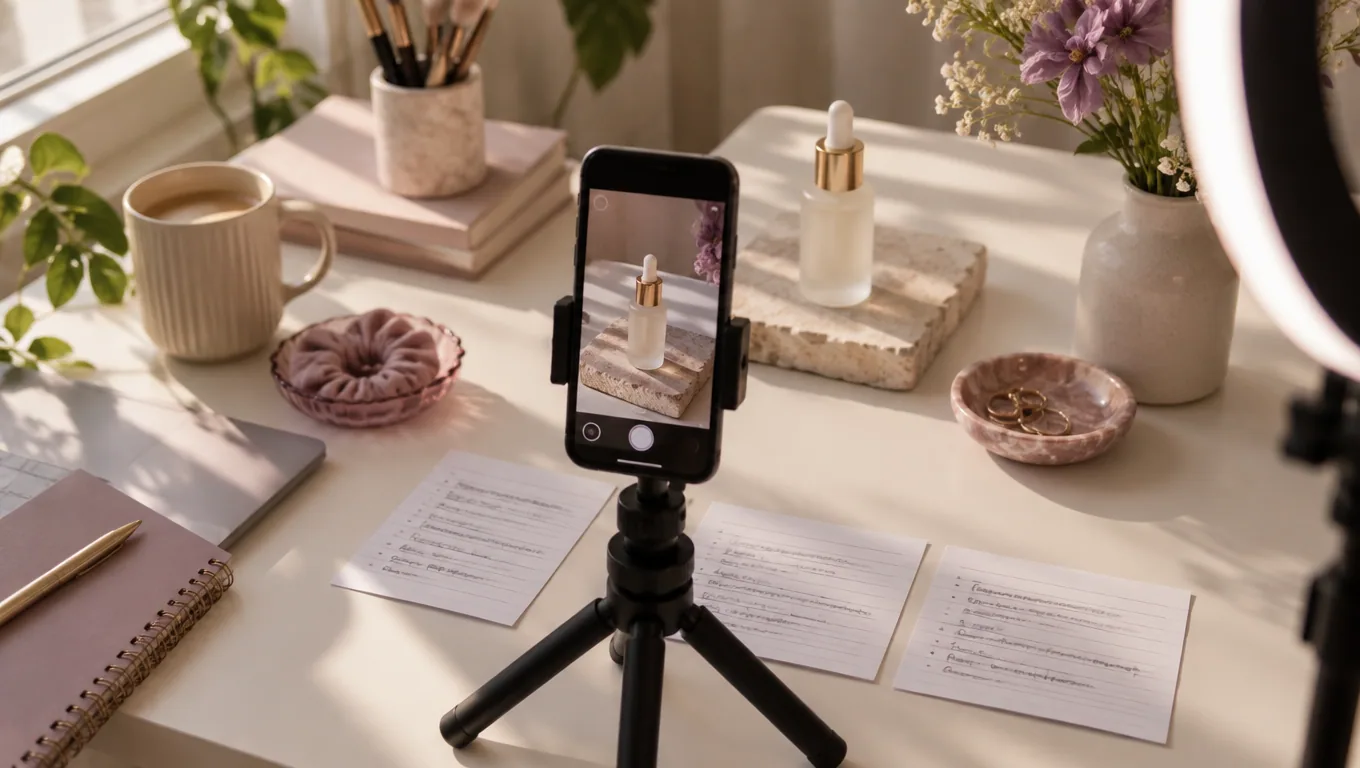
What Is a UGC Video? The Format, the Length, and Why It Outperforms Studio Footage
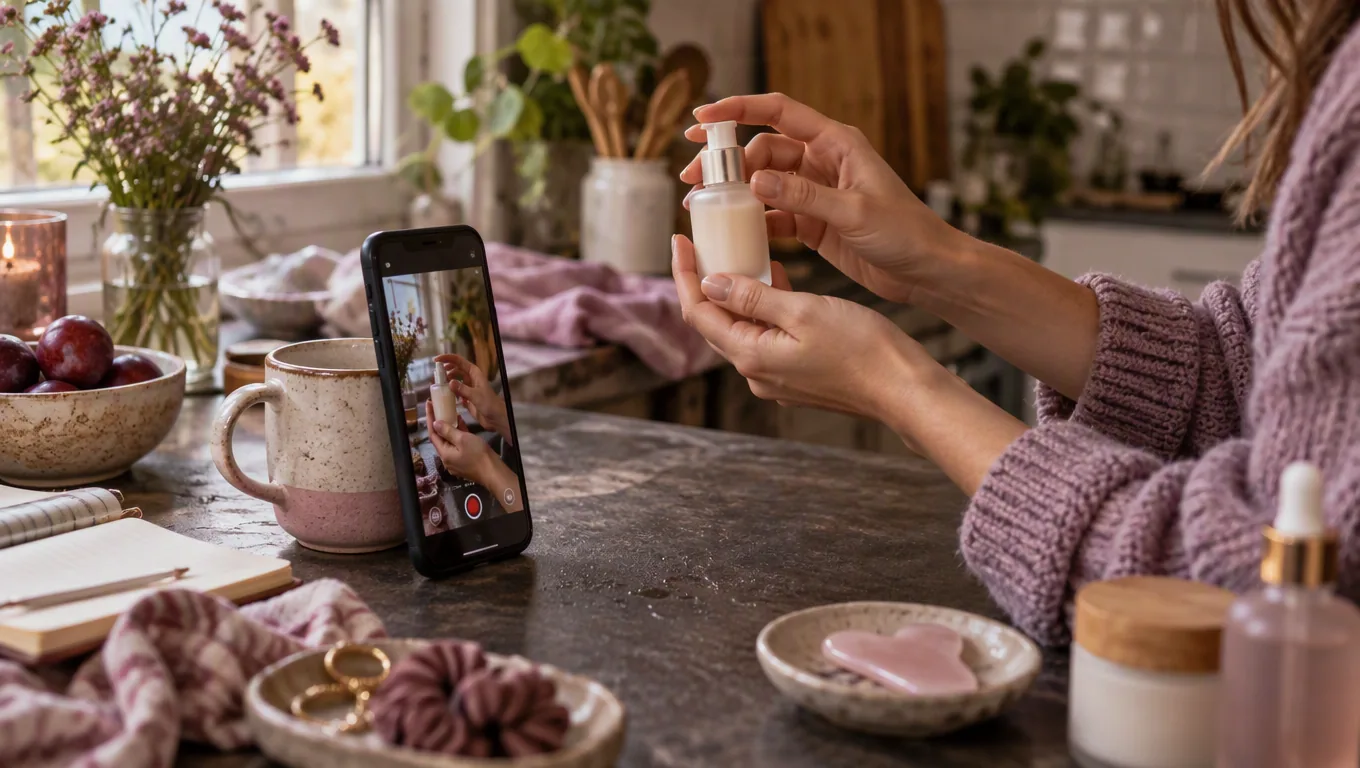
A UGC video is a short, vertical video shot on a phone in which one person speaks directly to the camera about a product. It is handheld, lit by whatever light is in the room, recorded with the phone's own microphone, and usually runs somewhere between fifteen and forty-five seconds. It looks like something a customer posted, not something an agency delivered.
Short answer: "UGC video" describes a format, not a person. The recognisable traits are a 9:16 vertical frame, a single speaker addressing the lens, handheld or propped-phone framing, ambient room audio, no studio lighting, and a runtime short enough to survive a feed. Brands commission this look because it reads as a recommendation rather than an advertisement.
What a UGC video physically looks like
If you are about to commission one, it helps to know what lands in your asset folder. The deliverable is almost always a single vertical file, and it carries a consistent set of physical characteristics:
- Vertical frame. Shot in portrait, filling a phone screen edge to edge. The standard ratio is 9:16. Square 1:1 versions exist as feed variants, but the native shape is vertical.
- One speaker, facing the lens. Eye contact with the camera, not with an off-screen interviewer. No cutaway to a host, no two-person dialogue.
- Handheld or propped. The frame drifts slightly. Arms enter and leave the shot. The phone is held at arm's length, balanced against a mug, or leaned on a bathroom shelf.
- Available light. A window, a kitchen ceiling bulb, a ring light at most. No key-and-fill setup, no seamless backdrop.
- Ambient audio. Room tone, a bit of reverb, occasionally a passing car. Recorded on the phone mic or a clipped lav, not a boom in a treated room.
- Real domestic background. A worktop with clutter on it, a bed, a car interior, a gym corner. The background is not designed.
- Cuts, not transitions. Jump cuts where the speaker restarts a sentence, plus a few product close-ups. No wipes, no motion graphics beyond burned-in captions.
The tell that separates a UGC video from a branded spot is not resolution. Modern phones shoot 4K. The tell is control. Studio footage looks controlled: the light is placed, the background is chosen, the line is delivered cleanly. A UGC video looks like the person pressed record and got on with it.
How long a UGC video should run

Most UGC video briefs land in the fifteen to forty-five second range, and there is a structural reason for that rather than a rule handed down by a platform.
Under about twelve seconds you cannot fit a hook, a claim, and a reason to believe it. Over about sixty seconds a single unedited talking head has to sustain attention on personality alone, which is a much harder ask. The middle of that range gives you room for roughly four beats: a hook in the first seconds, the problem, the product doing something visible, and a closing line.
Two practical notes on length when you are writing the brief:
- Ask for the raw take as well as the cut. A forty-second delivery usually contains a strong fifteen-second version you can trim for a different placement.
- Ask for the hook as a separate re-record. Swapping the first three seconds is the cheapest creative variant you will ever produce, and one of the changes most worth testing. Our hook examples for the first three seconds are a reasonable starting list.
Placement specs sit on top of all this. Aspect ratios, safe zones, and maximum durations differ by surface. Those belong in the TikTok spec reference and the Meta spec reference rather than in the creative definition.
The recognisable sub-formats
"UGC video" is the umbrella. Underneath it sit a handful of shapes that briefs name directly. Knowing which one you are asking for prevents the vague deliverable where a creator talks pleasantly for thirty seconds and demonstrates nothing.
- Unboxing. The product arrives in packaging and gets opened on camera. The camera stays low and close on hands. The appeal is anticipation and the reveal of what is physically in the box.
- Testimonial. A person states an outcome they attribute to the product. It is the most claim-heavy shape and the one with the most consent and substantiation baggage, which is why it gets its own treatment in our guide to customer testimonial video structure.
- Demo. The product is used on camera in the way a buyer would use it. Hands, mess, sequence, result. Best format for anything where the objection is "does that actually work".
- Before-and-after. Two states with the product between them. Visually persuasive and legally the most sensitive, because the implied claim is a result.
- Reaction. The speaker responds to something: a comment, a competitor claim, a first taste, a price. Cheap to shoot, useful for answering objections in the voice of the viewer.
Most winning ads are hybrids. A demo with a testimonial closing line. An unboxing that turns into a before-and-after. The named shapes matter mainly as shorthand in a brief so the creator knows what has to appear on screen.
Why the format converts
The format works because of framing, not production value. When a person speaks to a phone camera from their own kitchen, the viewer processes it in the same slot as a friend's recommendation. The FTC's own explanation of why endorsements are regulated starts from exactly that instinct: told about a great new product by a person, most people let it factor into the buying decision, which is why the FTC endorsement guides treat that kind of recommendation as material to consumers.
Three mechanics follow from that framing:
- Lower ad defences. A polished spot announces itself as paid persuasion in the first frame. A handheld vertical clip does not, so it earns a second or two more attention before the viewer decides.
- Native fit. The clip has the same shape, pacing, and audio texture as the organic posts around it, so it does not break the scroll rhythm of a vertical feed. That is the same logic behind Reels placement creative.
- Specific, ordinary detail. Creator scripts tend to include the small stuff a copywriter would cut: the mess, the awkward step, the thing that took two tries. Specificity is what makes a claim feel checked rather than written.
None of that guarantees a result. Format only buys attention; the offer, the product, and the claim still decide whether anyone buys.
Be honest: the advantage is eroding
The reason to be careful with the "UGC always outperforms studio" line is that the format is now everywhere. When a viewer sees a dozen handheld vertical talking heads a day, handheld vertical stops signalling authenticity and starts signalling advertisement, the same way testimonial-heavy landing pages stopped reading as trustworthy once every page had them.
What you see as this happens:
- Convention becomes visible. Certain hooks and shot patterns get recognised as ad furniture, and viewers skip on the pattern rather than the content.
- Creative burns faster. The more your creative resembles everything else in the feed, the shorter its useful life. That is a fatigue problem, and it is best managed with a deliberate testing framework rather than more volume.
- Polish becomes a differentiator again in some categories. In furniture, jewellery, and premium skincare, a well-lit static shot can now be the pattern interrupt.
The practical conclusion is not to abandon the format. It is to stop treating "shot on a phone" as the strategy. The durable part is the specific claim, the visible demonstration, and the voice. The handheld look is packaging.
Commissioning one, or generating one

There are three ways to end up with a UGC video, and they differ in cost, control, and what you are allowed to say about the speaker.
- A real customer. Highest trust, lowest control. You get what they filmed, you need documented permission to use it in paid media, and their claims have to be substantiable.
- A paid creator. A person hired to shoot to your brief. Control over script and shot list, turnaround measured in days to weeks, and disclosure obligations because the relationship is material.
- An AI actor. A synthetic performer delivering your script in a phone-shot-style scene. Fast and repeatable across scripts and languages, with the hard rule that the speaker is not a customer and must never be presented as one. The mechanics of that production route are covered in what AI UGC is and how it works.
Whichever route you take, the brief looks the same: one sub-format, one claim, one hook, one visible demonstration, a stated runtime, and a vertical deliverable. If you want to see the format assembled end to end, you can create an AI UGC video from a product URL and inspect the hook, script, and scene structure before you commission anything at scale.
One naming point worth settling internally. A clip made by a hired creator or a synthetic actor is not, strictly, user-generated content. Nobody generated it as a user. The accurate term is creator-style or UGC-style, and using it inside your team keeps your claims honest. We unpack that distinction in UGC-style ads without misleading viewers.
Try the format before you brief it
UGCfy AI turns a product URL or brief into hooks, scripts, storyboards, AI actor scenes, and captions, with vertical 9:16 and square 1:1 outputs in more than 20 languages. It is built for e-commerce brands, DTC teams, and agencies testing creator-style paid social. Generate a UGC video from your product URL.
Frequently asked questions
What is a UGC video in simple terms?
It is a short vertical video, usually filmed on a phone, in which one person talks straight into the lens about a product. Handheld framing, ordinary room lighting, ambient audio, and a runtime of roughly fifteen to forty-five seconds are the defining traits. The look matters more than who pressed record.
How long should a UGC video be?
Most briefs land between fifteen and forty-five seconds. Below about twelve seconds there is no room for a hook, a claim, and a demonstration; above about a minute a single talking head has to carry attention on personality alone. Ask for both the full take and a trimmed short version so you have variants to test.
Does a UGC video have to be made by a real customer?
In practice, no. Most UGC videos running as ads are made by paid creators or generated with AI actors. The term describes the format. If the speaker is not a genuine customer, do not present them as one, and disclose material relationships behind any endorsement.
What is the difference between a UGC video and a UGC-style ad?
A UGC video is the asset itself. A UGC-style ad is that asset placed and paid for inside an ad account, with the tracking, disclosure, and spec requirements that come with paid media. The same file can be an organic post one week and an ad the next.
Which UGC sub-format should I brief first?
Start with a demo if the main objection is whether the product works, a testimonial if the objection is whether it works for people like the buyer, and an unboxing if the appeal is physical — packaging, size, or what is included. Reaction and before-and-after are usually second-round tests.
Is UGC video still more effective than studio footage?
The advantage is real but narrowing as the format saturates. Handheld vertical video no longer automatically signals authenticity, and in some premium categories a clean studio shot is now the pattern interrupt. The lasting advantage sits in specific claims and visible demonstration, not in the phone-shot look itself.